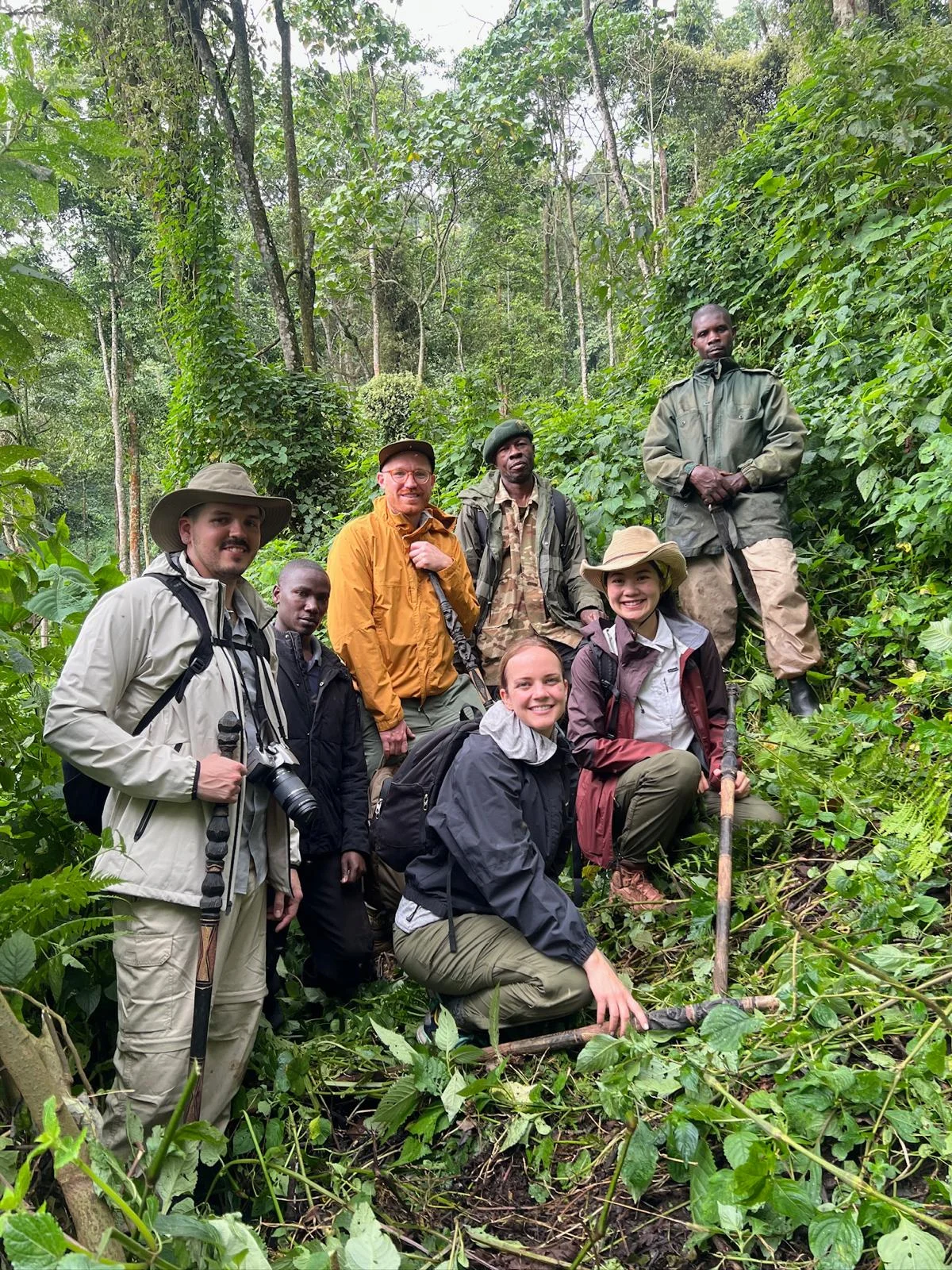

Buhoma sector was the first part of Bwindi Impenetrable National Park to be visited by tourists for gorilla trekking adventures. It is also home to the oldest gorilla family in the park. Explore our Uganda safari packages to see how Buhoma fits into your trip.
Buhoma is located in the northwestern part of the park.
Buhoma Gorilla Trekking
Buhoma gorilla trekking is a rewarding experience but very competitive. It is hard to book a permit in Buhoma just a few days before your tour, so it’s best to book early for a better chance.
Buhoma is one of the sectors in Bwindi Impenetrable National Park, located in southwestern Uganda. The other sectors are Nkuringo, Ruhija, and Rushaga.
Buhoma was the first place in Uganda where gorilla trekking started. The Mubare gorilla family in Buhoma was the first group to be habituated, in 1993.
Gorilla Groups to Trek in Buhoma Sector
Mubare Gorilla Family: Named after the Mubare Hills in Bwindi National Park, where trackers and rangers first sighted the group. This is the oldest mountain gorilla family in Uganda and is found in the Buhoma sector. The group was led by Ruhondeza, a silverback, at the time of habituation. Ruhondeza died in 2013 after being injured in a fight with another silverback, Kanyonyi, who wanted to take over the group. Ruhondeza was known for being ambitious and often fought rivals and younger males to maintain his dominance.
Habinyanja Gorilla Family: Gets its name from the local word “Nyanja,” meaning a pool of water, since the group was first sighted near one. The family was habituated in 1997 and opened for tourism in 1999. It was originally led by Mugurusi, the dominant silverback, who passed leadership to his two sons. Mugurusi’s sons, Mwirima and Rwansigazi, could not get along due to their differences: Mwirima preferred staying in one area, while Rwansigazi was an adventurer who loved exploring new places. This led to the group splitting in 2002, with Mwirima forming his own family, now called the Rushegura Gorilla Family. Rwansigazi stayed with the Habinyanja family and later handed leadership to his son Makara, who now leads the group.
Rushegura Gorilla Family: Also known as Group R, formed in 2002 when silverback Mwirima left the Habinyanja family to start his own group. Mwirima died in 2015, and the family is now led by Kabukojo.
What to Bring for Buhoma Gorilla Trekking
When planning to trek gorillas in Buhoma, tourists should not forget hiking boots, warm clothes, a raincoat, garden gloves, energy snacks, drinking water, and other personal items.
Buhoma can be visited all year round, but the best months are June to August and December to February, during the dry season. Rain during the wet season can sometimes affect the trekking experience.
Buhoma Gorilla Permits
Buhoma sector is home to four habituated gorilla families. Eight permits are available for trekking each group daily, meaning the Buhoma sector provides 24 gorilla permits in total per day.
It is one of the most visited sectors of Bwindi Impenetrable National Park, having been the first place where gorilla trekking began in Uganda, starting in 1993 with the Mubare gorilla family.
Buhoma has a lower altitude compared to other regions, making gorilla trekking here less demanding. The gorilla families in this sector are also easy to reach, and in many cases, gorillas can even be seen near the park headquarters.
Most tourists who want to combine gorilla trekking with wildlife viewing choose Buhoma gorilla permits, since the sector is closest to Queen Elizabeth National Park, where visitors can go on game drives and take boat cruises along the Kazinga Channel, an area rich in wildlife.
Booking a gorilla permit in the Buhoma sector is especially convenient for travelers using air transport. AeroLink Uganda operates two flights daily to Kihihi Airstrip, the closest airstrip to the Buhoma sector.
The cost of gorilla permits in the Buhoma sector matches other regions of the park, with a trekking permit costing $800 per person.
Bird Watching After Gorilla Trekking in Buhoma
Apart from mountain gorillas, Bwindi Impenetrable Forest is also home to forest elephants, giant forest genets, African golden civets, bushbucks, and several antelope species, along with primates like chimpanzees, red-tailed monkeys, L’Hoest’s monkeys, black and white colobus monkeys, and vervet monkeys.
Bwindi has 348 bird species, some found only in this area, including the African green broadbill, Chapin’s flycatcher, Shelley’s crimsonwing, short-tailed warbler, Grauer’s rush warbler, and many more.
You can take nature walks in the Buhoma sector using trails like the Munyaga River Trail, Waterfall Trail, Rushura Hill Trail, Muzabajiro Loop Trail, and River Ivy Trail, offering wide views and chances to see birds and other wildlife.
Community and Village Walks in Buhoma Sector
Tourists visiting the Buhoma sector can take part in community walks to learn about local life. One key group is the Batwa people, who once lived in the forest alongside the gorillas for over 500,000 years before the area became a national park.
The Batwa depended on the forest for food, medicine, and shelter. Today, they share their skills with visitors, including how they hunted and gathered fruits, and visitors can meet a traditional healer and enjoy songs and dances from their culture.
Accommodation in Buhoma Sector
Buhoma is known for having some of the best luxury lodges in Bwindi Impenetrable Forest National Park.
High-end travelers can stay at lodges such as A&K Sanctuary, Buhoma Lodge, Volcanoes Bwindi Lodge, and Mahogany Springs Lodge, among others.
Other options in the Buhoma sector include Engagi Lodge, Buhoma Community Haven, Bwindi View Bandas, Bwindi Volcano Lodge, Gorilla Mist Camp, Kitandara Tented Camp, and Gift of Nature Lodge, among others, with the right choice depending on budget and where your gorilla permit was booked.
How to Get to Buhoma Sector
Buhoma is the easiest sector to access in Bwindi. It is about 550 kilometers from Kampala, taking around 9 to 10 hours by road. From the Ishasha sector of Queen Elizabeth National Park, it’s a 4 hour drive. You can also fly from Kajjansi Airfield or Entebbe International Airport to an airstrip near the park.
Bwindi Impenetrable National Park can be visited throughout the year. However, the best time is during the dry months of June to September and December to February, when roads are easier to use and hiking trails are not muddy.