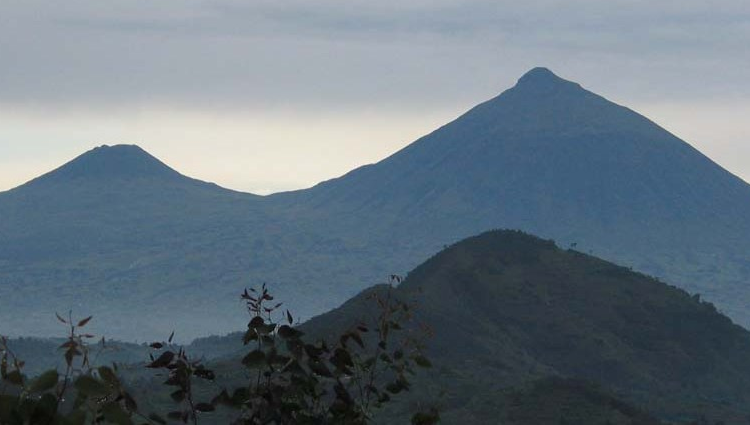
Mount Gahinga is situated on the border between Uganda, within Mgahinga Gorilla National Park, and Rwanda, within Volcanoes National Park.
It has an elevation of 3,474 meters above sea level, making it one of the prominent peaks in the region. Explore our Rwanda safaris to see how a visit here fits into your trip.
The mountain is located between Mount Sabyinyo and Mount Muhabura, forming part of the Virunga Massif. The other Virunga volcano mountains include Mount Bisoke, Mount Muhabura, Mount Karisimbi, Mount Nyamuragira, and Mount Mikeno.
The name “Gahinga” is derived from a local word meaning “piles of stones,” referencing the many stone piles cleared from local farmlands at the mountain’s base.
Wildlife on Mount Gahinga
The slopes of Mount Gahinga are home to various primate species, including golden monkeys, vervet monkeys, blue monkeys, and olive baboons.
Mount Gahinga also provides habitat for numerous bird species found in the Virunga Massif area. Some examples include olive woodpeckers, Rwenzori batis, Rwenzori nightjar, yellow-vented bulbul, dusky crimsonwing, grey-capped warbler, pin-tailed whydah, double-collared sunbird, white-necked raven, and firefinch stonechat.
At the peak of Mount Gahinga, you’ll find a swampy caldera approximately 180 meters wide. The mountain features afro-montane forests, bamboo forests, and several distinct vegetation zones.
The slopes of Mount Gahinga are also home to mountain gorillas, particularly the Nyakagezi group, which can be trekked from Uganda’s Mgahinga National Park. The cost of gorilla permits in Uganda is $800, while it’s $1,500 in Rwanda.
Cultural Encounters Near Mount Gahinga
When visiting Mount Gahinga, don’t miss the opportunity to interact with the ancient forest-dwelling people known as the Batwa. These hunter-gatherer communities have lived in the rainforests for generations, relying on them for shelter, food, and medicinal plants.
They have a unique culture and can share various myths and stories about the forests. You can also visit a traditional healer to learn about their use of different plants for treating various illnesses.
What to Do Near Gahinga Mountain
Hiking: Mount Gahinga can be hiked in just one day, taking approximately 6 hours. Tourists should come prepared with hiking gear such as a raincoat, jacket, warm clothing, insect repellent, sunscreen, a hat, sunglasses, hiking shoes, a camera, and a packed lunch. The best time for hiking Gahinga is during the dry season, for the clearest views of the caldera at the top.
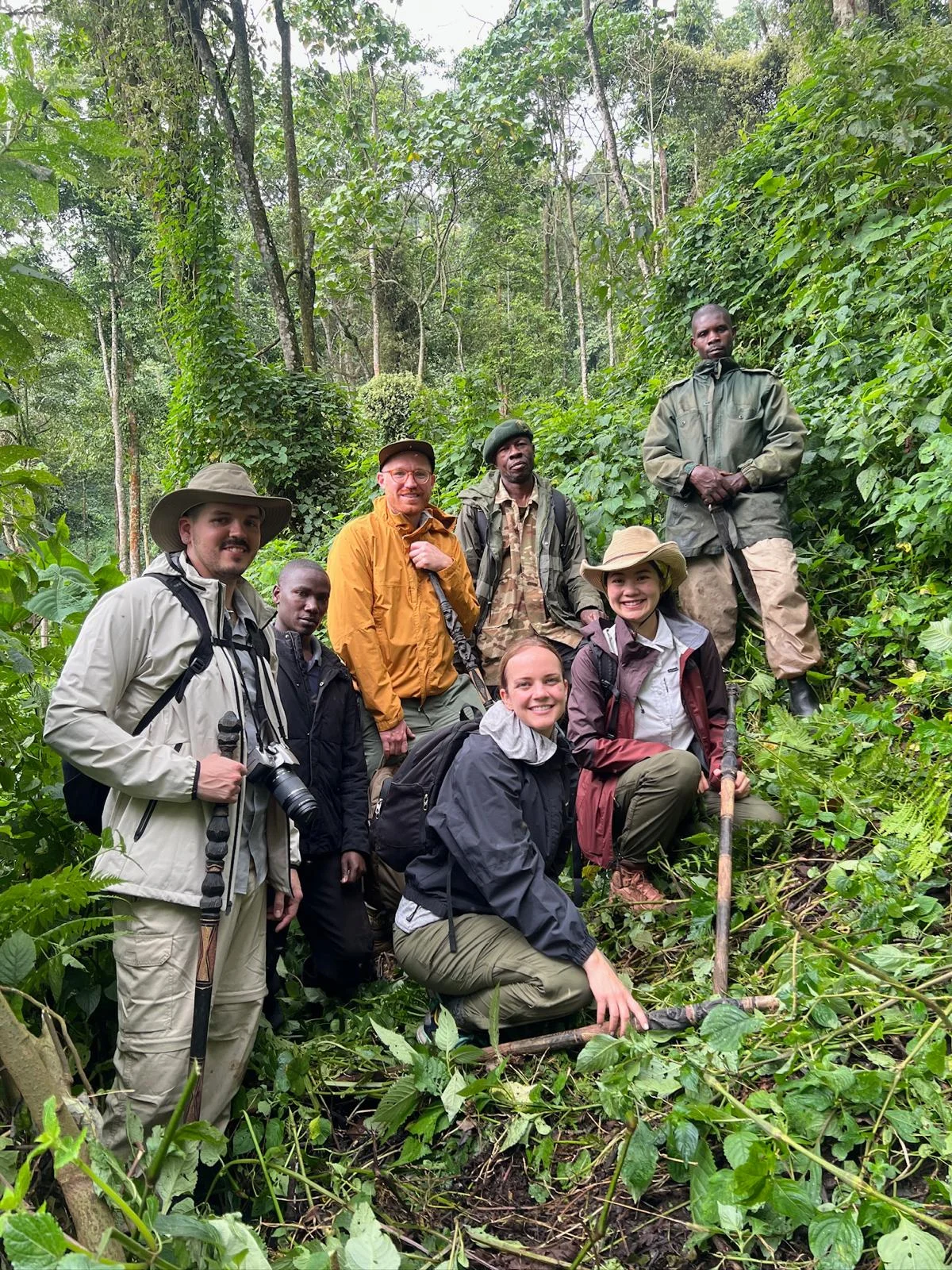
Gorilla Trekking in Mgahinga: Mgahinga gorilla trekking is the most commonly done activity in the Virunga ranges around Mount Gahinga. Tourists can trek mountain gorillas and spend an hour observing their close relatives while taking photographs. Gorilla trekking permits must always be booked in advance, preferably 3 months before the actual trekking date, especially during peak season, to avoid disappointment. Gorilla trekking is best done during the dry season, though some rain is still possible, so it’s better to carry all the necessary gear.
Bird Watching: Mount Gahinga is home to approximately 115 species of recorded birds.
Golden Monkey Tracking: Golden monkeys are a unique species found only in the Virunga region. They move in groups of about 30 to 100 individuals on the slopes of Mount Gahinga. Unlike gorilla trekking, which can be expensive, golden monkey tracking is more affordable, and visitors have unlimited time to spend with these monkeys, which are notably less camera-shy compared to mountain gorillas.
Visit the Batwa: Before national parks were established around the Virunga mountains, the Batwa people had lived in the forests for over 500,000 years, depending on them for food, shelter, and medicine. Today, they live at the edge of the forests, but their culture hasn’t completely faded. You can visit the Batwa, interact with locals, hear ancient stories of the rainforests, enjoy traditional dances, visit a traditional healer, and much more.
Getting There: Location of Mgahinga
Mgahinga Gorilla National Park is located in the southwestern part of the country, bordering the Democratic Republic of Congo and Rwanda.
The park can be accessed by road from Kampala, with the journey taking approximately 8 to 9 hours. Alternatively, you can fly to Kisoro airstrip from Entebbe International Airport or Kajjansi airfield. Some tourists prefer to fly into Kigali International Airport in Rwanda and then drive for 4 hours to reach the park.
Best Time to Visit Mgahinga
The best time to visit Mgahinga Gorilla National Park is during the two dry seasons: from June to August and from December to February.
During these periods, the roads leading to the park are very accessible, the vegetation is not as thick, making it easier to navigate the trekking trails, and there are also better opportunities for photographing the gorillas, as they are often found in more open areas.
Accommodation: Where to Stay
There are a number of accommodation options in the park and in Kisoro town where tourists can stay while visiting Mgahinga Gorilla National Park.
Some of the lodges found in the area include River Mucha Hotel, Kisoro Travelers Rest Inn, Chameleon Hill Lodge, Lake Mulehe Safari Lodge, Community Campground, Virunga Hotel, Kisoro Tourists Hotel, and Mgahinga Safari Lodge, among others.