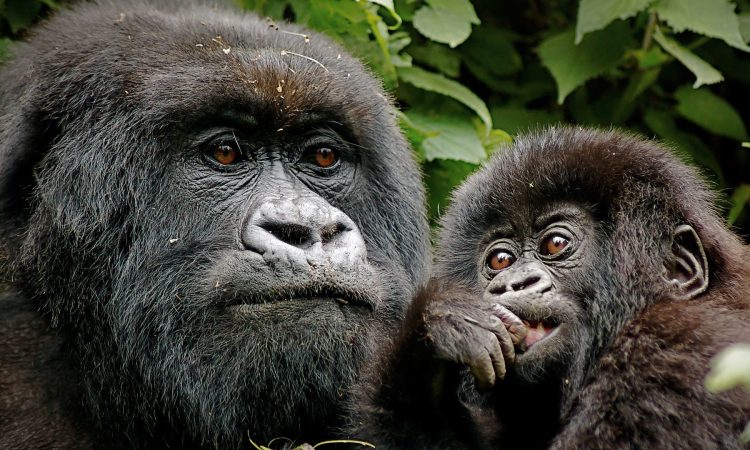
Rwanda’s Volcanoes National Park is one of the places to trek mountain gorillas. The park is located north of Kigali city, bordering Uganda in the Virunga Range volcanoes. Browse Rwanda tours to see how a gorilla family visit fits into your safari.
With over 15 mountain gorilla families, below are some of the most popular gorilla families you’ll trek in Rwanda. Want to see the full range of options first? Browse all itineraries covering these gorilla families.
Rwanda Gorilla Groups List
Below are some of the popular groups in Volcanoes National Park Rwanda.
Bwenge Gorilla Family
The Bwenge gorilla family derives its name from a local word that means wisdom. This is also the group that featured in the movie “Gorillas in the Mist.” Bwenge gorilla family was formed when the dominating silverback, Bwenge, broke away from his family in 2007 to form his own group. Bwenge can be trekked from the slopes of Karisoke, between Mount Karisimbi and Mount Bisoke.
Ugyenda Gorilla Family
The Ugyenda gorilla family derives its name from a local word that means “on the move.” This is because the family is always moving from place to place, making it even harder to trek. The group wanders around the slopes of Karisimbi and is composed of 11 members, including two silverbacks.
Hirwa Gorilla Family
The Hirwa gorilla family was formed by a combination of members who split off from the Sabyinyo gorilla family and the Agashya gorilla family. This is one of the lucky gorilla families to have a set of twins, born in 2011.
Kwitonda Gorilla Family
The Kwitonda gorilla family can be trekked on the slopes of Mount Muhabura. The group derives its name from the dominant silverback, Kwitonda, which means “Humble One.” The group is said to have migrated from the Democratic Republic of Congo.
Agashya Gorilla Family
The Agashya gorilla family, also known as Group 13, is dominated by Agashya, the silverback who took over leadership from Nyakarima. The group can be trekked around Mount Sabyinyo. Agashya is known for taking his family into higher slopes when he senses danger.
Sabyinyo Gorilla Family
The name Sabyinyo means “old worn-out teeth” in the local language. The group derives its name from Mount Sabyinyo, one of the Virunga ranges. The Sabyinyo gorilla family is dominated by Guhonda, the famous reigning silverback and the heaviest silverback in Volcanoes National Park. The group inhabits the slopes of Mount Sabyinyo and Mount Gahinga and is one of the easiest gorilla families to trek in Volcanoes National Park.
Umubano Gorilla Family
The Umubano gorilla family was formed when Charles broke away from his natal group after several fights with Ubumwe, who dominated the group. This group derives its name from a local word that means “Living together” and is composed of 13 members and two silverbacks.
Amahoro Gorilla Family
The Amahoro gorilla family can be trekked from the slopes of Mount Bisoke. The group derives its name from a local word that means “peace.” The group is one of the most peaceful families in Volcanoes National Park. They have even lost some members to the Umubano gorilla family.
Karisimbi Gorilla Family
The Karisimbi gorilla family, also known as Susa B family, broke away from the Susa A gorilla family in 2008. This is the hardest family to trek in Rwanda, inhabiting the higher slopes of Mount Karisimbi. The group is composed of 16 members with 2 silverbacks.
Susa Gorilla Family
The Susa A gorilla family was one of the most interesting gorilla families in Rwanda, with 42 members at the time of habituation before the group separated. This group was also thoroughly studied by Dian Fossey and was one of the lucky families to have twins, Impano and Bwishimo. The group can be trekked around the Susa river, in their home range on the slopes of Mount Karisimbi.
Titus Gorilla Family
The Titus gorilla family is one of the groups researched by Dian Fossey. The dominant silverback lost his family, including his father, to poachers. Dian Fossey noted that he had difficulties breathing and seemed underdeveloped but overcame this. The group derives its name from the silverback, Titus.
Other Rwanda Gorilla Groups
Other gorilla groups in Rwanda include the Igisha, Isimbi, Noheli, Kwisanga, Kigoma, Muhoza, and Urwego gorilla families.