Mount Bisoke, also known as Visoke, is located on the border of Congo and Rwanda, with its summit in Rwanda. This dormant volcano is one of the eight Virunga Massif volcanoes, formed through volcanic eruptions. Explore our Rwanda safaris to see how a visit here fits into your trip.
Mount Bisoke stands at an elevation of 3,700 meters above sea level, requiring tourists to be in good physical condition to climb. The mountain features Hagenia Hypericum forests, lobelia bushes, alpine meadows, and bamboo forests.
The northern flank of Mount Bisoke has two small cones formed during eruptions in 1957, just a few kilometers from the summit.
The Mount Bisoke Volcano
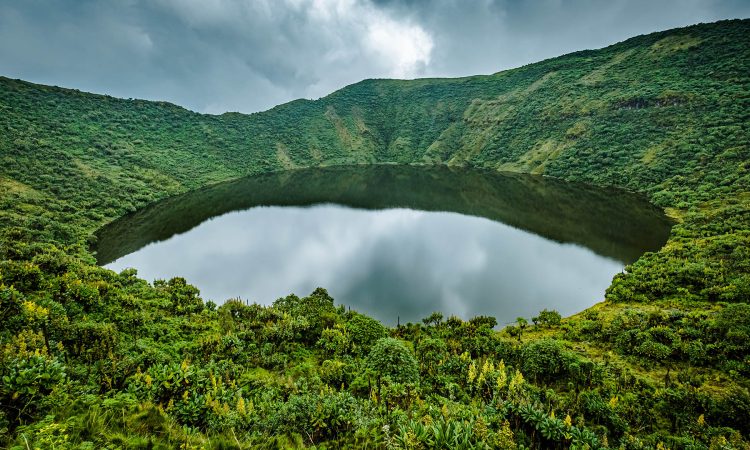
The summit of Mount Bisoke features a crater lake called Ngezi, which visitors can walk around.
Mount Bisoke has a classic conic shape, clearly showing its volcanic origins from base to summit. The mountain is often covered in fog throughout the year.
The climb to the summit takes about 4 hours, with a 2 hour descent, making it a one day activity. Timing can vary depending on hikers’ fitness and weather conditions.
The cost of hiking Mount Bisoke is $75 per person, which includes a trained ranger guide to assist during the hike.
The best time to visit Mount Bisoke is during the dry season, though Volcanoes National Park is open year round.
Other Virunga Volcanoes include Mount Karisimbi, Mount Sabyinyo, Mount Gahinga, Mount Muhabura, Mount Mikeno, Mount Nyiragongo, and Mount Nyamuragira.
History of Mount Bisoke
Mount Bisoke was formed by tectonic plate movements and reaches an altitude of 3,711 meters above sea level. Two eruptions have been recorded: one in 1891 and another in 1957.
The 1957 eruption, which occurred 11 kilometers north of the summit, formed the two small cones on the volcano’s northern flank.
Scientists suggest the area may still be active, with the potential for future eruptions.
Hiking Permit Fee
The hiking permit for Mount Bisoke can be purchased on the same day as the hike or in advance. Permits can be obtained from the Rwanda Development Board or a trusted tour operator, who can also arrange transport and accommodation.
Foreign non-residents pay $75 per person, foreign residents pay $65, East African Community residents pay $60, and Rwandan citizens pay $55.
Porters can be hired for $10 to help carry luggage.
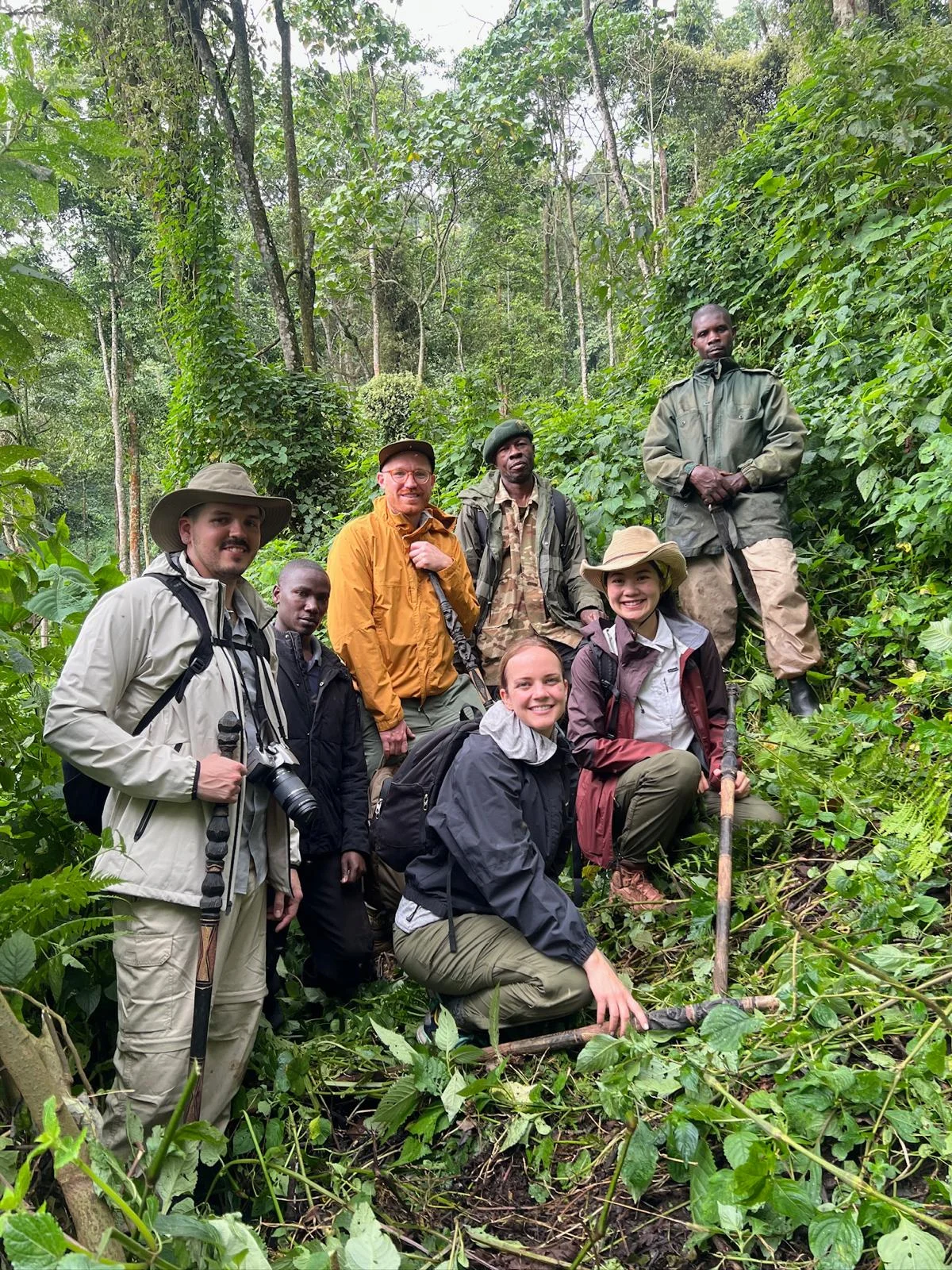
Mount Bisoke has two hiking trails, both leading to crater lakes. The trail to the summit crater lake is the most popular, while the Lake Ngezi trail is easier. Hiking Mount Bisoke is suitable even for beginners. The round trip takes about 8 hours: 6 hours for the ascent and 2 hours for the descent, depending on the hikers’ pace.
The hike starts early in the morning at the park headquarters in Kinigi, where visitors are briefed on the Virunga Mountains, hiking rules, and assigned a ranger guide. Porters are available to help carry luggage for a small fee.
After the briefing, you’ll be transported to the starting point, a 40 minute drive from the headquarters, where you can pick up a hiking stick before beginning your trek.
Once at the summit, the weather and timing will determine how long you can stay. On a clear day, you can enjoy a picnic with wide views of the crater lake, other Virunga volcanoes, lush vegetation, and farmland below.
Entry Fee
The hiking permit fee includes entry to Volcanoes National Park, with the same tiered pricing: $75 for foreign non-residents, $65 for foreign residents, $60 for East African Community residents, and $55 for Rwandan citizens.
For those interested in combining the hike with a visit to Dian Fossey’s tomb, fees remain the same.
Other Activities
Mountain Gorilla Trekking: Volcanoes National Park is home to over ten habituated gorilla groups. Gorilla trekking starts early in the morning after a briefing at the park headquarters in Kinigi. Visitors trek for several hours and are given an hour with the gorillas to observe and photograph them. Permits cost $1,500 each and should be booked in advance.
Visit the Karisoke Research Center: The Karisoke Research Center, founded by Dian Fossey, is located near Mount Bisoke. Fossey dedicated her life to studying and protecting mountain gorillas. She was killed in 1985 and is buried near the research center, alongside her beloved gorillas.
Bird Watching: Volcanoes National Park is home to 178 bird species, including 13 endemic to the Albertine Rift. Birds like the collared apalis, Rwenzori turaco, and African fish eagle can be spotted while hiking Mount Bisoke.
Cultural Experience: Local communities near the park offer cultural experiences, including traditional dance performances and crafts. Visitors can learn basket weaving or buy handmade souvenirs.
Visit Musanze Caves: Musanze Caves, recognized as a tourist attraction in 2013, are 2 kilometers long and were formed by volcanic activity. Visitors can explore the caves and see bats inside.
Golden Monkey Trekking: Golden monkeys are a unique species found in groups of up to 80. Trekking golden monkeys costs $100 per person in Volcanoes National Park.
Location
Mount Bisoke is located on the Rwanda-Congo border, 35 kilometers northeast of Goma and near Lake Kivu. It is a two hour drive from Kigali, Rwanda’s capital, and can also be accessed via flights to Kigali International Airport.
Best Time to Visit
Rwanda’s tropical climate allows for visits year round, but the best time to hike Mount Bisoke is during the dry seasons of June to August and December to February. During these months, trails are less muddy and views are clearer.
Accommodation: Where to Stay
There is no accommodation directly on Mount Bisoke, as the hike is completed in 5 to 6 hours. However, visitors can stay in nearby accommodations around Volcanoes National Park, such as Kinigi Guest House, La Palme Hotel, Hotel Muhabura, Gorilla Nest Lodge, Le Bambou Gorilla Lodge, Bisate Lodge, and Mountain Gorilla View Lodge.
These accommodations range from budget to luxury options.