Home to the Eastern Chimpanzee, Uganda is also known as the primate capital of the world. It has over 13 primate species found across the country, including half of the world’s endangered mountain gorillas.
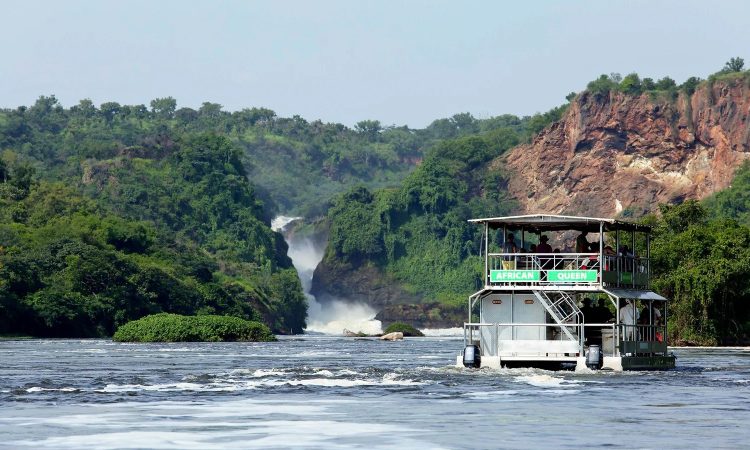
Chimpanzees in Uganda can be seen in Kibale Forest National Park, Budongo Forest in Murchison Falls National Park, Kalinzu Forest, and Kyambura Gorge in Queen Elizabeth National Park.
The Eastern Chimpanzee
The eastern chimpanzee is a subspecies of the common chimpanzee found in Uganda. It also lives in Rwanda, Burundi, Tanzania, South Sudan, the Central African Republic, and the Democratic Republic of Congo.
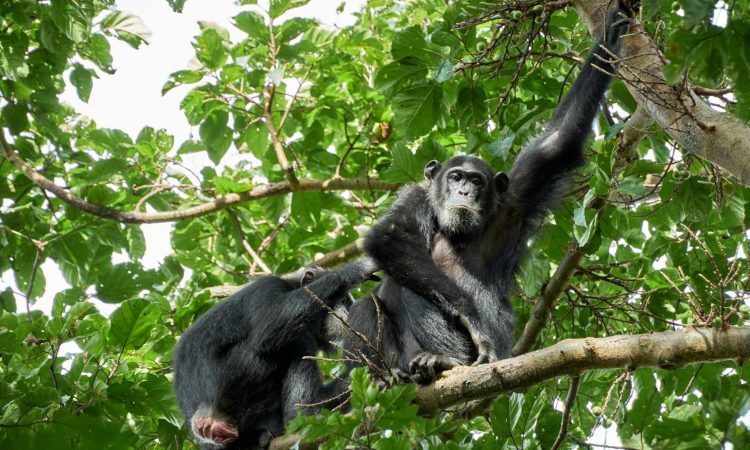
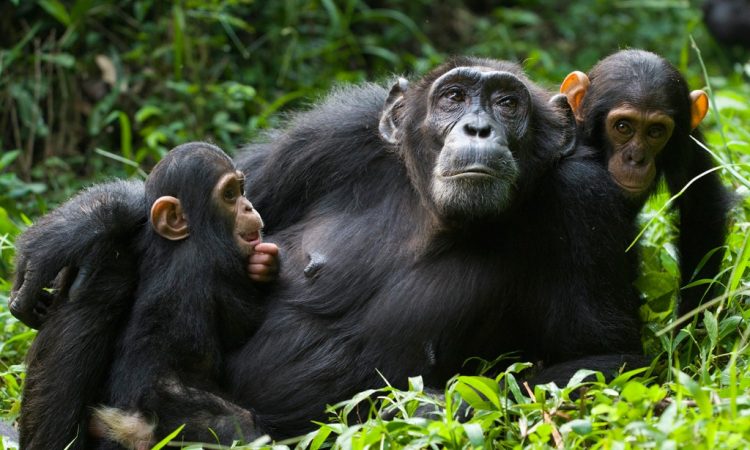
Chimpanzees spend much of their time both in trees and on the ground. Every evening, they build new nests high up in the trees to sleep in. Young chimpanzees sleep with their mothers until they are old enough to build their own nests nearby.
Eastern chimpanzees are omnivores, but they mostly eat plant-based foods such as fruits, leaves, shoots, stems, seeds, and bark. They sometimes eat insects, termites, ants, small antelopes, and even small monkeys.
Chimpanzees have also been seen hunting in groups. For example, they sometimes hunt red colobus monkeys by working together. Some block the prey, others chase it, and after a successful hunt, they share the meat. Leopards are the main predators of eastern chimpanzees. However, humans are also a major threat due to habitat destruction, poaching for bushmeat and the pet trade, and diseases like Ebola.
Eastern chimpanzees have black hair covering most of their bodies, except on their hands, nose, ears, toes, fingers, and face. Adult chimpanzees in the wild weigh between 40 to 60 kilograms. Males have an average height of about 63 inches, while females are around 51 inches tall.
Best Time to Visit Chimpanzees in Uganda
Chimpanzees in Uganda can be visited all year round. However, the best time is during the dry seasons from June to September and December to February. During this time, the forest is easier to walk through, the paths are less slippery, and the roads to the parks are more accessible.
The rainy seasons from March to April and October to November are also good for chimpanzee trekking. During this time, food is more available in the forest, so chimpanzees are easier to find. Some lodges also offer discounts during the rainy season, which is helpful for budget travelers.