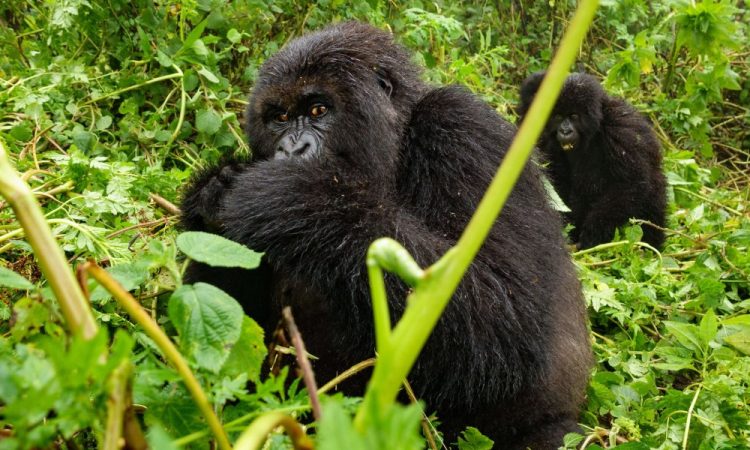
There are many types of gorillas, and each species has its own special features. Gorillas are the largest primates on Earth. They show many human-like behaviors and share a large amount of DNA with humans.
There are two main species of gorillas in the world: the western gorilla and the eastern gorilla. Each species has two subspecies that are well known to scientists. The western gorilla includes the western lowland gorilla and the Cross River gorilla. The eastern gorilla includes the mountain gorilla and the eastern lowland gorilla.
Eastern Gorillas
Eastern gorillas are also called Gorilla beringei. They include two subspecies: the mountain gorilla and the eastern lowland gorilla. Adult male eastern lowland gorillas can weigh between 140 and 200 kilograms, while females weigh about 90 to 100 kilograms.
As they grow older, male eastern gorillas develop a silver patch of hair on their backs, which is why they are called silverbacks. These gorillas live in Uganda, Rwanda, and the eastern part of the Democratic Republic of Congo, mainly in the Virunga Mountains.
Eastern gorillas are active during the day. They spend about 30% of their time feeding and 40% resting. They build new nests every day, either in trees or on the ground, where they sleep at night.
Although males are polygamous, only the dominant silverback is allowed to mate with the females. Young males must challenge the leader to win this right or leave the group to start their own.
Mountain Gorillas
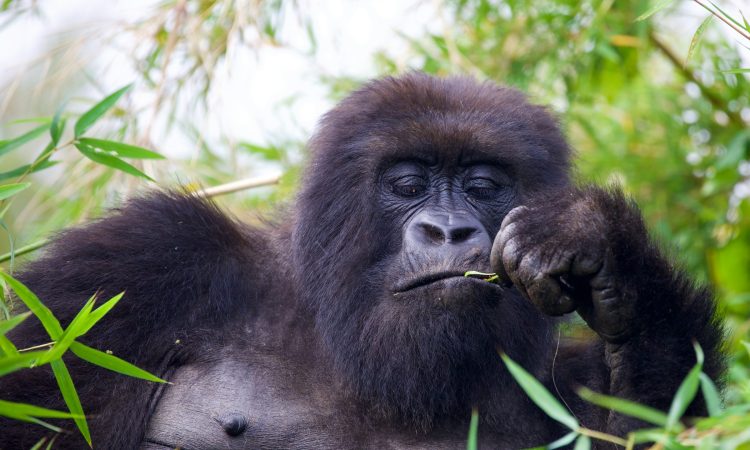
Mountain gorillas were once critically endangered, with fewer than 900 left. However, recent counts show their number has gone above 1,000. In the past, they were close to extinction, but the efforts of American primatologist Dian Fossey helped save them. Sadly, she was killed by poachers in 1985.
Mountain gorillas live only in Uganda, Rwanda, and Congo. They are found in Bwindi Impenetrable National Park, Mgahinga Gorilla National Park, Volcanoes National Park, and Virunga National Park. Mgahinga, Volcanoes, and Virunga are part of the Virunga Conservation Area, where the 8 Virunga Mountains are located. This is the most common gorilla type seen by tourists during gorilla trekking.
Mountain gorillas are also known as Gorilla beringei beringei. The name “Beringei” comes from Captain Robert von Beringe, who shot two unknown animals in 1902 that turned out to be mountain gorillas.
Mountain gorillas have longer, thick fur and tougher skin than eastern lowland gorillas. Their back hair is shorter. Males develop silver hair on their backs and thighs as they grow.
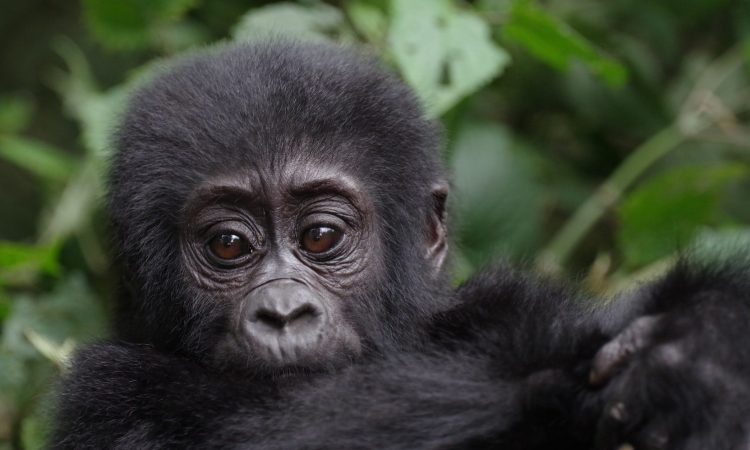
Their pregnancy lasts 8 to 9 months. Females reach sexual maturity early but are only fertile for 1 to 2 days each month, so their birth rate is low. Gorilla babies weigh about 2 kilograms at birth and hold onto their mother’s back until about 4 years old, feeding only on breast milk.
The silverback leads the group and protects them, often risking his life for their safety.
Mountain gorillas mostly eat plants but sometimes add termites, insects, and larvae to their diet.
Eastern Lowland Gorillas
The eastern lowland gorilla, also known as Gorilla beringei graueri, is the largest of all gorilla types. Its scientific name comes from Austrian scientist Rudolf Grauer, who first described the species in the 1800s.
They live only in Kahuzi-Biega National Park, Maiko National Park, the Itombwe Mountains, and the Tayna Gorilla Reserve in Congo. They live in lowland and mountain tropical forests. Unlike mountain gorillas, they can survive in zoos.
Eastern lowland gorillas have short, dark fur. Their heads are large compared to their bodies. Adult males can weigh up to 250 kilograms.
Western Gorillas
Western gorillas include two subspecies: the western lowland gorilla and the Cross River gorilla. They are completely herbivorous, eating leaves, shoots, stems, buds, fruits, and sometimes termites, ants, worms, and grubs.
They live in Cameroon, Angola, Equatorial Guinea, Central African Republic, Gabon, and Congo, in swampy, lowland, and forested areas. Male western gorillas weigh about 157 kilograms, and females about 80 kilograms. They have strong jaw muscles and short muzzles. They can move up to 4 kilometers a day in search of food.
Western Lowland Gorillas
Western lowland gorillas live in the Democratic Republic of Congo, Angola, Cameroon, Gabon, and Equatorial Guinea. In zoos, they can weigh more than 270 kilograms. They are the smallest of all gorilla subspecies and have greyish-brown fur covering most of their bodies.
As they mature, females also grow silver hair on their backs and thighs. Western lowland gorillas are often seen in zoos because they adapt well to captivity.
They live in groups led by a dominant male silverback who makes all decisions. Female western lowland gorillas become fertile between the ages of 9 and 10 and are only fertile for 1 to 3 days each month.
Cross River Gorillas
The Cross River gorilla is also called Gorilla gorilla diehli. It was first identified in 1904, but more studies were done in the 1980s. Males grow up to 1.75 meters tall and weigh around 200 kilograms. Females grow up to 1.4 meters tall and weigh about 100 kilograms.
This is one of the most endangered gorilla types, with only around 200 left in the wild. Their pregnancy lasts 8 to 9 months. Like other gorillas, they live in groups led by a silverback who controls the group’s daily life.
Book Your Tour Now
If you want to add more days or visit more places, please contact us through our main contact page using the button below.