The eastern gorilla, also known as Gorilla beringei, is divided into two subspecies: the eastern lowland gorilla, also called Grauer’s gorilla, and the mountain gorilla, known as Gorilla beringei beringei. Eastern gorillas are known to live in larger groups compared to western lowland gorillas.
Eastern gorillas are also rarer than western gorillas and are the largest primates in the world. They are only found in Uganda, Rwanda, and the Democratic Republic of Congo. The two subspecies differ in numbers, with about 3,800 eastern lowland gorillas and only around 1,000 mountain gorillas left.
Although these gorillas look slightly different, they also live in different places. Mountain gorillas live in mountain and subalpine forests, while eastern lowland gorillas live in the eastern part of the Democratic Republic of Congo in the Albertine Rift forests.
Subspecies of Eastern Gorilla
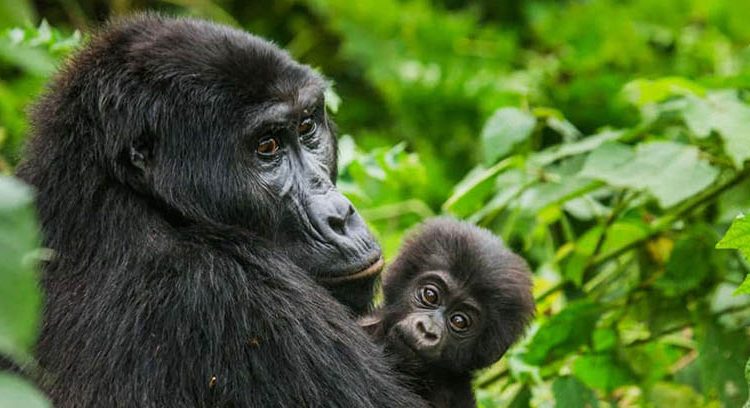
Mountain Gorilla (Gorilla beringei beringei)
Mountain gorillas are more critically endangered than eastern lowland gorillas. They live in the Virunga Massif mountains, which cover parts of Congo, Uganda, and Rwanda, and in Bwindi Impenetrable National Park in southwestern Uganda. The name beringei comes from Captain Robert von Beringei Friedrich, who shot two unknown animals in 1902. These animals were later identified as mountain gorillas.
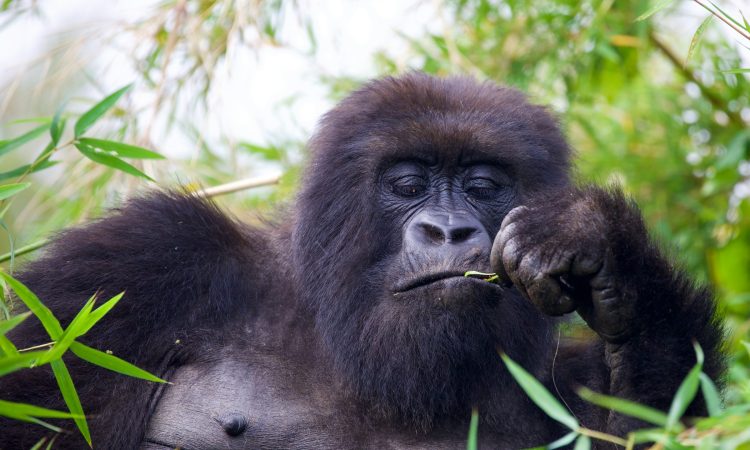
Mountain gorillas are slightly smaller and lighter than eastern lowland gorillas. They have longer and thicker fur, which helps them stay warm in cold mountain climates. As male mountain gorillas grow older, they develop grey fur on their backs, which is why they are called silverbacks.
Silverbacks lead the group and take care of daily activities. They protect the group from predators, other gorilla groups, and lone silverbacks. Both silverbacks and female gorillas will fight to protect their group or babies, even if it means losing their lives.
Mountain gorillas are herbivores and feed mainly on vegetation such as bamboo shoots, bark, leaves, fruits, nuts, and stems. Sometimes, they also eat small animals like rodents, termites, ants, and insects.
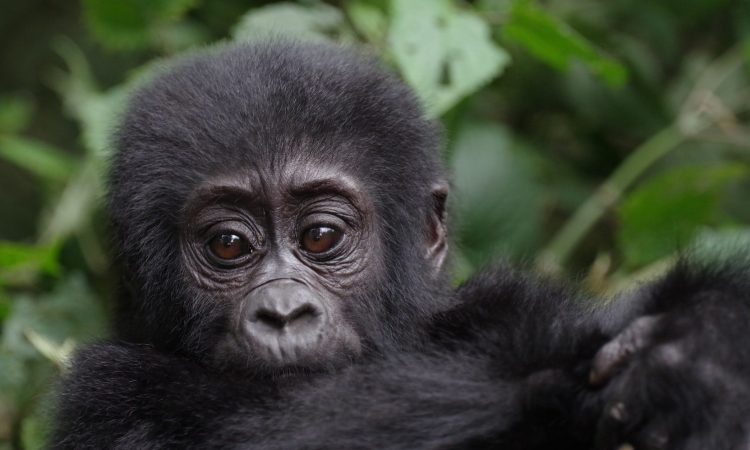
Female mountain gorillas reach sexual maturity earlier than males. Their birth rate is low because they only have 1–2 fertile days in a month. The gestation period is about eight and a half months, and mothers breastfeed their babies for up to three and a half years.
Eastern Lowland Gorilla (Grauer’s Gorilla)
The eastern lowland gorilla is found in Maiko National Park, Kahuzi-Biega National Park, Itombwe Massif, Usala Forest, and Tayna Gorilla Reserve in the Democratic Republic of Congo. Unlike mountain gorillas, the eastern lowland gorilla is larger and is the biggest of all gorilla types.
There are more eastern lowland gorillas in the wild than mountain gorillas, with an estimated population of 3,800. Female eastern lowland gorillas can weigh about 100 kilograms, while males can weigh up to 210 kilograms in the wild and even about 250 kilograms in zoos.
Eastern lowland gorillas, like other gorillas, eat leaves, fruits, shoots, stems, bark, and sometimes ants, insects, and termites. They live in both mountainous and lowland tropical forests and have the widest altitude range of all gorilla species.
Eastern lowland gorillas live in groups of up to 30 individuals. They are considered very social. Each group is led by a silverback. When young males grow up, they may challenge the leader or leave with some group members to form a new group of their own.
Book Your Tour Now
If you want to add more days or visit more places, please contact us through our main contact page using the button below.