Planning for gorilla trekking in Africa? The mountain gorilla is one of the most well known primates in the world. This subspecies is only found in three locations: Volcanoes National Park in Rwanda, Virunga National Park in the Democratic Republic of Congo, and both Bwindi Impenetrable National Park and Mgahinga Gorilla National Park in Uganda.
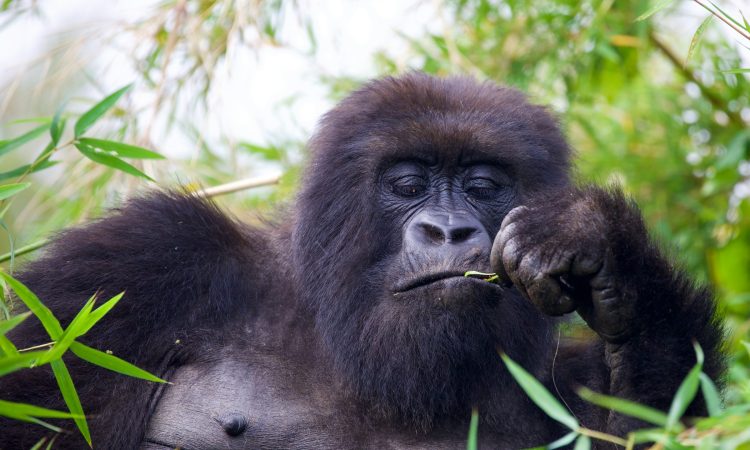
Mountain gorillas have thick fur, which helps them survive in cold weather at high elevations, typically between 2,200 and 4,300 meters above sea level. They mostly move on the ground on all fours, walking on their knuckles with their arms supporting most of their body weight, though they can walk upright on two legs for short distances. Adult males are called silverbacks because they grow grey hair on their backs as they age. Their arms are longer than their legs, similar to chimpanzees, and they can climb trees to reach fruit if the branches are strong enough to hold their weight.
Why Mountain Gorillas Are Endangered
Several threats continue to put mountain gorillas at risk (see the World Wildlife Fund’s mountain gorilla page for more on these threats):
Habitat loss: Farming, deforestation, settlement, and industrial development have taken over much of the gorillas’ natural range, pushing them into higher, colder elevations where illnesses such as pneumonia become more likely.
Disease: Mountain gorillas can catch human illnesses such as flu, scabies, and pneumonia, since they lack strong immunity against them. Ebola is another serious disease that has affected wild gorilla populations.
Poaching: Gorillas are sometimes caught in snares set for other animals, such as antelopes. They have also been hunted for trophies in the past, despite the fact that they cannot survive well in captivity.
Pet trade: Some people attempt to capture gorillas to sell as pets, but gorillas do not thrive outside their natural habitat and often die soon after being taken from the wild.
Bushmeat: In some areas, particularly those affected by conflict or militia activity, gorilla meat is sold or eaten as a means of survival.
Traditional medicine: In some cultures, gorilla body parts are believed to hold power for charms or rituals, despite no scientific basis for these beliefs.
Oil and gas exploration: In Virunga National Park, exploration rights granted to some companies have raised concerns, since increased human activity in the park can lead to more poaching.
Political and civil unrest: Ongoing instability, particularly in the Democratic Republic of Congo, continues to threaten gorillas. During the 1990s, an influx of refugees into gorilla habitats led to a rise in poaching for bushmeat.
The late Dian Fossey, an American primatologist, played a major role in mountain gorilla survival. She spent years studying and protecting gorillas in Rwanda, where poaching was once common, and her work helped grow the population and raise awareness worldwide. She was killed in 1985 at her research camp, but conservationists have continued her work since.
Two other factors also put gorillas at risk: lack of awareness, since some local communities don’t know the value gorillas bring to conservation and tourism, and natural disasters such as heavy rain, landslides, and floods, which can damage gorilla habitat.
Mountain Gorilla Trekking and Habituation
Female gorillas carry their young for about 8 to 9 months, and newborns weigh around 4 pounds. Infants ride on their mothers’ backs from about 4 months old until around 3 years of age. Females typically begin giving birth around age 10 and may have 2 to 6 offspring in a lifetime.
Mountain gorillas were once listed as critically endangered by the IUCN due to habitat loss, poaching, and civil unrest, but were reclassified as endangered after their population passed 1,000 (see the IUCN Red List assessment), a recovery credited in part to income generated through gorilla permits.
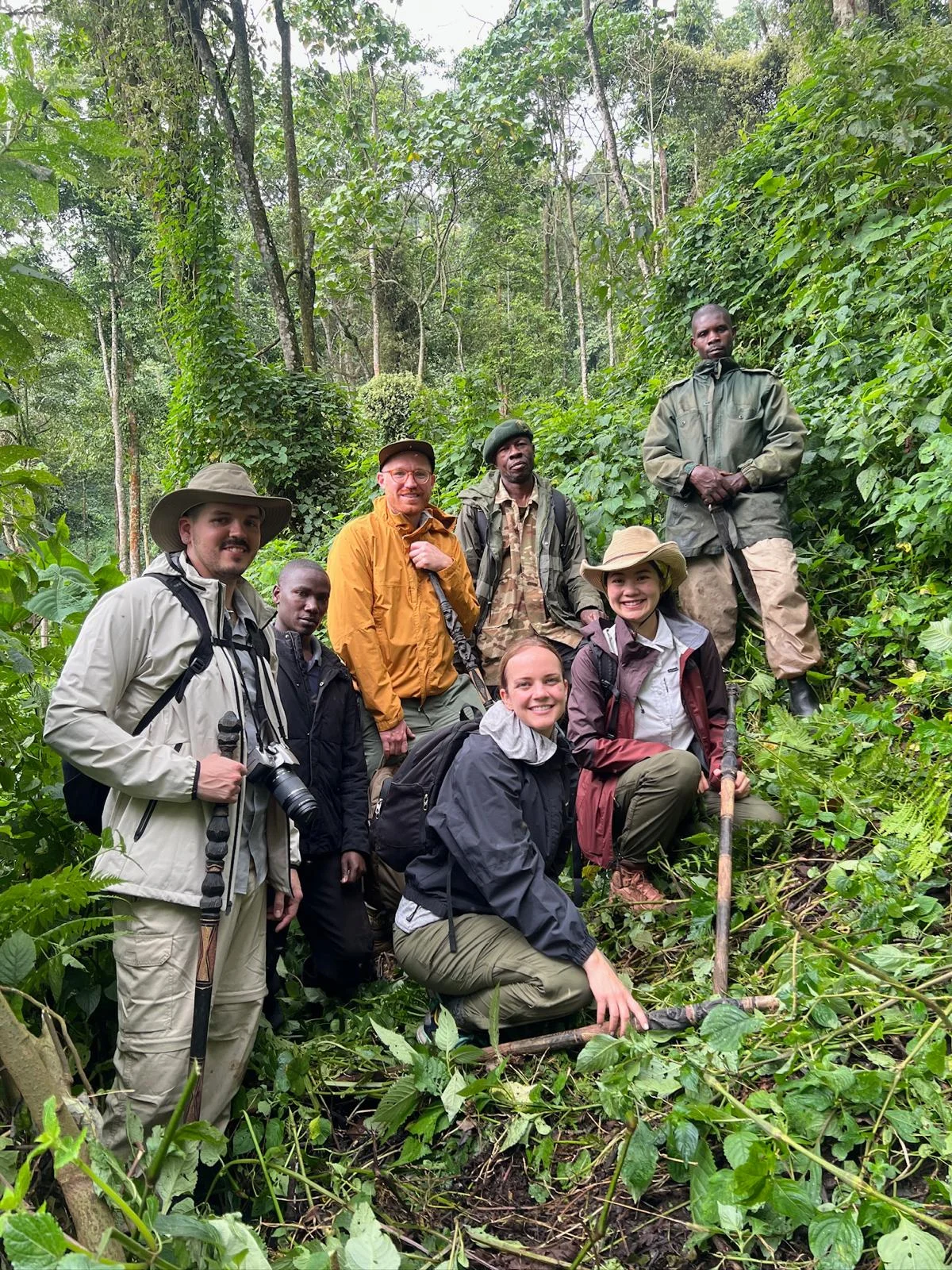
Trekking takes place in Bwindi and Mgahinga in Uganda, Virunga in the Democratic Republic of Congo, and Volcanoes in Rwanda, together forming the Virunga Conservation Area. Rangers guide visitors to locate a gorilla family, and once found, standard trekking allows one hour of observation. Gorilla habituation, where visitors join researchers helping wild gorillas grow accustomed to humans, allows four hours instead.
Mountain Gorilla Size: Height, Weight, and Physical Traits
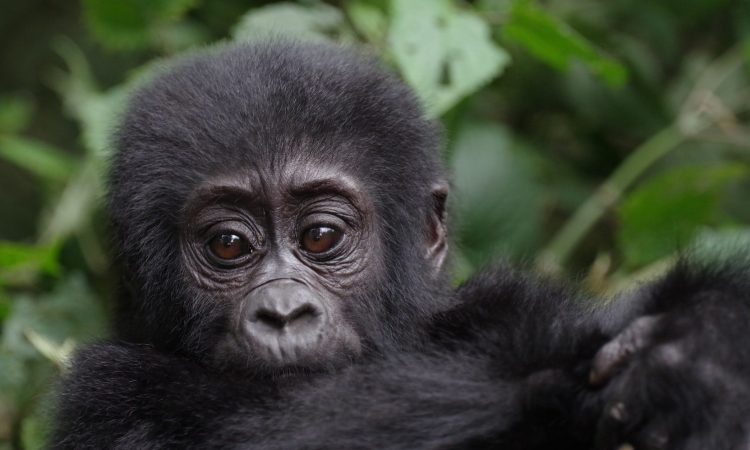
Baby mountain gorillas are born small and fragile, typically weighing 3 to 4 kilograms, and nurse until around age 4. Mountain gorillas are herbivores, feeding mainly on leaves, fruit, bark, bamboo shoots, stems, and pith, occasionally supplementing their diet with ants and termites collected using sticks. Fruit makes up roughly a quarter of their diet, drawn from around 140 plant species in their forest habitat. Since these plants contain high moisture content, gorillas rarely need to drink water directly.
Adult males typically weigh between 136 and 196 kilograms and eat up to about 30 kilograms of food a day, while adult females weigh between 68 and 113 kilograms and eat around 18 kilograms a day. The average height of a mountain gorilla is about 1.7 meters, with adult males generally standing between 5 feet 5 inches and 5 feet 9 inches, and adult females around 5 feet tall.
The heaviest gorilla ever recorded weighed 267 kilograms, and the tallest stood 1.95 meters.
Gorillas have 32 teeth. Flat molars and bacteria in their gut help them chew and digest tough, fibrous plants. They favor plants higher in sugar and protein and lower in fiber, and sometimes eat ash and soil for minerals and easier digestion. Their large thumbs help them break open tough fruit shells. They travel 3 to 6 square kilometers a day searching for food.
Mountain Gorilla Scientific Name
The scientific name for mountain gorillas is Gorilla beringei beringei. The species was first described in 1847 and later formally named in 1852. Mountain gorillas are believed to share ancestry with ape and monkey lineages that lived in Africa and Arabia millions of years ago.
Each gorilla has a unique nose print, much like a human fingerprint.
What Is a Group of Gorillas Called?
A group of gorillas is called a troop or band, and is sometimes referred to as a family. Groups typically number between 5 and 30 individuals, usually made up of one adult male silverback who leads the group, along with several females, blackback males, juveniles, and infants.
Gorillas often remain in their birth group until they’re ready to start a family of their own. As young males mature, they may challenge the silverback for control of the group. If they lose, or choose not to fight, they typically leave to live alone for a time, sometimes challenging other groups in an attempt to attract members and start their own.
If a group’s only silverback dies, the females will usually leave, either joining a lone male or another existing group, though they may remain briefly until a new male takes over. In some cases, an incoming silverback will kill young males already in the group to remove future rivals to his leadership. Most blackback males eventually leave their birth group as well, since only the dominant silverback is permitted to mate with the group’s females. Once a female gives birth for the first time within a group, she typically remains there permanently, and mothers stay especially close to their infants until around age six.
The largest group ever recorded, in Rwanda, had 65 members. When a silverback dies, his oldest son usually takes over leadership. A silverback typically leads his group for four to seven years.
When a female is ready to mate, she approaches the male, makes eye contact, and may touch him or tap the ground to get his attention, since only the dominant silverback is permitted to mate with the group’s females.
Because silverbacks are constantly working to grow their families, conflict can arise when two groups cross paths, as a silverback may see a rival group as a threat to his own females. These confrontations can be serious, sometimes resulting in deep injuries or death.
Mountain Gorilla Behavior
Gorillas build fresh nests from plant material each evening and are active roughly from 6 am to 6 pm. Groups are led by a silverback, who decides the group’s daily movements and defends the group from threats such as leopards, poachers, or rival gorillas, sometimes at great personal risk.
Gorillas build a fresh nest every evening, almost always in a new spot. Nests can be built on the ground or in trees, depending on safety and available plants. Females and infants often nest in trees, while silverbacks usually stay on the ground. Sharing a nest is rare and mostly happens during rain. Gorillas also build temporary day nests around midday to rest, groom, or play.
Outside of conflict, gorillas are calm and gentle. When threatened, they may display warning behaviors such as chest beating, ground thumping, hooting, tearing up plants, or moving sideways. Gorillas are also reported to show a fear response to caterpillars and chameleons, though the reasons for this are not well understood.
Gorillas are afraid of water and avoid getting wet, often using fallen logs to cross streams. When the weather turns cold, group members huddle close together to stay warm.
Young gorillas play often, wrestling and doing somersaults, and even silverbacks sometimes join in with the females.
The Importance of Mountain Gorillas
Mountain gorillas play environmental, economic, and scientific roles that make them one of Africa’s most valuable species.
Environmentally, mountain gorillas help balance the forest ecosystem by consuming large amounts of vegetation daily and spreading seeds as they move, which supports new plant growth and benefits the wider forest, its wildlife, and the people who depend on it.
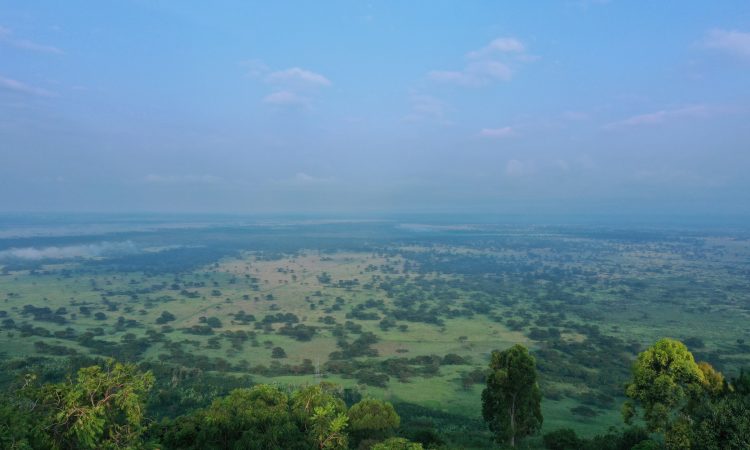
Economically, gorilla tourism brings significant income to local communities and the countries where trekking takes place. It has created jobs for rangers and guides, funded infrastructure such as hospitals, schools, roads, and hotels, and generated permit revenue that supports ongoing protection and research, contributing to the species’ population recovery (learn more from the Dian Fossey Gorilla Fund). Many visitors also extend their trip to nearby destinations such as Queen Elizabeth National Park, spreading tourism income further.
Scientifically, mountain gorillas help researchers better understand the broader great ape family, including humans, contributing to knowledge in primate behavior, biology, and evolution.
Getting to the Parks
Volcanoes National Park in Rwanda is about a 2 hour drive from Kigali International Airport. Virunga National Park is most easily reached by flying into Rwanda and driving 4 to 5 hours to the park. Bwindi and Mgahinga in Uganda can be reached from Kampala by road in about 8 to 9 hours, or by flying into Rwanda and driving roughly 4 hours, or by flying from Entebbe to Kisoro or Kihihi airstrips followed by a short drive.
Can You Own a Gorilla?
Gorillas are wild animals, and their habitats are legally protected in the countries where they live. Mountain gorillas in particular cannot survive long in captivity. Beyond legal protection, gorillas require large daily quantities of specific plants, making their care impractical outside their natural habitat. Removing a gorilla from its home country to keep as a pet is illegal, and gorillas are also physically capable of causing serious harm when threatened. For these reasons, and because gorillas are deeply social animals that live in family groups, owning one is neither practical nor appropriate.
Even a baby gorilla that seems easy to handle is protected by its mother, who will charge to defend it.
How Gorillas Communicate
Gorillas occasionally touch noses or embrace one another, though this is rarely observed. They use around 22 distinct vocal sounds to express different emotions, most often produced by the silverback. Newborns communicate through crying, whimpering, and screaming. Gorillas also rely on smell, touch, and body language, with silverbacks able to release a strong scent that alerts the group to danger without noise. Adult gorillas may vocalize several times an hour while moving through the forest to stay in contact with the group, using grunts, barks, and hoots alongside facial expressions and body movements.
Gorillas also use chuckles, cries, and purrs to express fear, joy, anger, annoyance, and impatience. Infants can recognize their mother’s voice from an early age. In rare cases, gorillas have learned sign language to communicate with humans. Koko, a gorilla trained by researchers, is a well-known example.
Do Gorillas Like Humans?
Gorillas share close genetic ties with humans, with a DNA similarity of about 98%. Despite this, gorillas generally prefer to be left alone in their natural habitat, especially if they sense that humans pose a threat. It’s difficult to say with certainty whether gorillas like humans, since they remain wild animals with instinctive behaviors.
Gorillas can grow accustomed to human presence through a process called habituation, which allows people to observe them without causing stress. Habituation is carried out by rangers and researchers who visit the same gorilla family daily for about 2 to 3 years, helping the group become comfortable with people. Once habituation is complete, the family can be opened up for tourist trekking.
In the wild, mountain gorillas that haven’t been through habituation typically avoid people and may even charge if they feel threatened. Even habituated gorillas aren’t necessarily fond of humans; they’ve simply learned to tolerate their presence.
One notable exception is the Senkwekwe gorilla orphanage in Virunga National Park, which cares for baby gorillas orphaned by poaching. Here, gorillas have grown so accustomed to their caretakers that they play and interact closely with them, showing that gorillas can form a sense of safety and closeness with specific people. Even so, gorillas remain wild animals, and their behavior can change unpredictably.
Dian Fossey, who spent years living among mountain gorillas, once said she felt more comfortable being with gorillas than being around people.
Do Gorillas Eat Humans?
Gorillas do not eat humans. As covered earlier, they are almost entirely herbivorous, and on rare occasions may prey on small monkeys, though this is uncommon. They typically forage from early morning until early afternoon, rest and groom one another through midday, then resume foraging until around 7 pm before building nests to sleep in for the night.
While gorillas do not eat humans, they can become aggressive and cause serious injury if they feel threatened or disturbed. Gorillas are extremely strong, with adult males weighing up to around 400 pounds and canine teeth capable of inflicting serious harm.
Do Gorillas Eat Their Babies?
Gorillas do not eat their babies, though they sometimes practice infanticide under specific circumstances, consistent with the group takeover behavior described earlier. This most often happens when a female with a young infant joins a new group, or when a new silverback takes over a group, in which case the dominant male may kill the infant. This behavior occurs more often with male infants, since a silverback may see them as a future threat to his leadership as they mature.
Gorillas otherwise form strong bonds with their young. Mothers nurse and care closely for their infants, who cling to their mother’s chest or back and sleep in her nest until around 3 to 4 years old, after which they may begin sleeping in their own nearby nest.
Silverbacks also play a protective role within the group. If a mother dies, the silverback may take over caring for her infant, sometimes sharing his own nest with it. Infants often form close bonds with the group’s silverback, playing near him and benefiting from his protection, which can include removing poachers’ snares.
In short, gorillas do not eat their babies, and with some luck, you may even spot a baby gorilla during your trek.
What Provokes a Gorilla
Gorillas are generally gentle and rarely attack without provocation, and they typically display clear warning signs before charging. Common triggers include:
- Attempting to touch or take a mother’s baby
- Interfering with a silverback’s group, whether from a predator, rival gorilla, or human
- Making direct eye contact, which gorillas may interpret as a threat
- Shouting or making loud noises nearby
- A younger male attempting to mate with females in the group, which only the silverback is permitted to do
Following trekking rules and guidelines helps avoid provoking a charge, which can result in serious injury. Visitors are briefed on how to respond calmly to warning signs before the trek begins. See our full guide on what to do when a gorilla charges for detailed steps.
Mountain Gorilla Defense Mechanisms
Mountain gorillas defend themselves in several ways: standing upright to appear larger, displaying their canine teeth, chest beating and hooting to warn off threats, and issuing alarm calls that bring the group together around the silverback for protection. Their strong arms also allow them to fight off predators and move quickly through trees.
Gorilla Life Cycle
A gorilla’s gestation period lasts about 8.5 months, and births typically occur at night. Gorillas have a low birth rate: females give birth roughly every 4 to 6 years, are fertile for only 1 to 2 days a month, and may have just 2 to 6 offspring in a lifetime.
Newborns, called infants, nurse until age 3 to 4 and are carried in their mother’s arms for the first 6 months before clinging to her back until age 4 to 6. Between ages 4 and 8, gorillas become juveniles, weighing around 60 to 70 kilograms. Between 10 and 15, they reach adulthood, with males at this stage known as blackbacks. Males continue growing after females stop, eventually developing the grey back patch that marks the silverback stage, the final phase of a male gorilla’s development. The average gorilla lifespan is about 35 to 40 years.
A newborn is born with brown hair covering its body, except on the face, palms, fingers, armpits, and soles of the feet. It can sit up by about 3 months and start walking around 6 months old.
Females reach sexual maturity around 8 to 10 years old, males later, between 15 and 20 years. As gorillas age, some develop arthritis, which can damage bones, hands, and feet. Twins are possible but rare.
Mountain Gorilla Predators
Leopards are capable of killing an adult gorilla, particularly by exploiting their nighttime tree nests, though this is uncommon where gorillas live in groups. Humans remain the primary threat, through bushmeat hunting, the illegal pet trade, traditional medicine beliefs, and snares set for other animals.
Gorillas have a strong sense of smell, which helps them detect predators nearby.
Are Gorillas Dangerous?
Gorillas are not naturally aggressive and will typically give clear warning signs before attacking, as described above. If a threat does not retreat, a gorilla may charge, and an attack can involve biting, hitting, or dragging the threat to the ground. Silverbacks may also fight one another over group control or mating rights, and these confrontations can be violent. Most human attacks involve poachers or visitors who fail to follow trekking guidelines.
To avoid provoking a gorilla, stay calm if you see warning signs. Crouch down, avoid direct eye contact or showing your teeth, and turn off your camera flash, since sudden light can startle them. Visitors should keep at least 7 meters from gorillas at all times and never attempt to touch them.
Gorilla Trekking Permits
Gorilla trekking is available in Bwindi Impenetrable National Park and Mgahinga Gorilla National Park in Uganda, Virunga National Park in the Democratic Republic of Congo, and Volcanoes National Park in Rwanda. Permit prices vary by country: USD 800 (Uganda), USD 1,500 (Rwanda), and USD 400 (Congo, dry season). These figures exclude other trip costs. Permits should be booked well in advance, ideally 3 to 6 months ahead, especially during peak season, and are not available to children under 15 or to visitors who are unwell.
Before trekking, it’s important to be physically fit, since gorillas often live in high, forested terrain that requires hiking. Recommended gear includes waterproof hiking boots, garden gloves, insect repellent, plenty of drinking water, warm long-sleeved clothing, a raincoat, energy snacks, and sunscreen. Porters are available for a small fee to help carry luggage.