There are many mountain gorilla characteristics. Today, there are fewer than 1,000 mountain gorillas left in the world. Bwindi Impenetrable National Park is home to half of them.
Tourists can add to their gorilla tour by climbing the peaks of some Virunga Volcanoes to enjoy the views. When you reach the top of Mount Sabyinyo, you stand in three countries at the same time; Uganda, Rwanda, and Congo.
Besides these extra activities, this article shares the main characteristics of mountain gorillas in Africa.
Trekking to see mountain gorillas is one of the most popular tourist activities in Africa.
Gorillas are only found in Bwindi Impenetrable National Park and the Virunga Area, which includes Virunga National Park in Congo, Mgahinga National Park in Uganda, and Volcanoes National Park in Rwanda.
In the Virunga Conservation Area, mountain gorillas live near the forested slopes of several volcanoes. These include Mount Karisimbi, Mount Mikeno, Mount Bisoke, Mount Sabyinyo, Mount Nyamuragira, Mount Nyiragongo, Mount Muhabura, and Mount Gahinga.
19 Mountain Gorilla Characteristics You Should Know
- Gorillas live in tropical forests with thick bamboo trees. They cannot survive in zoos for long and usually die quickly. Gorillas seen in zoos are lowland gorillas.
- Mountain gorillas are very gentle animals, but they are still wild and can become aggressive when they feel threatened.
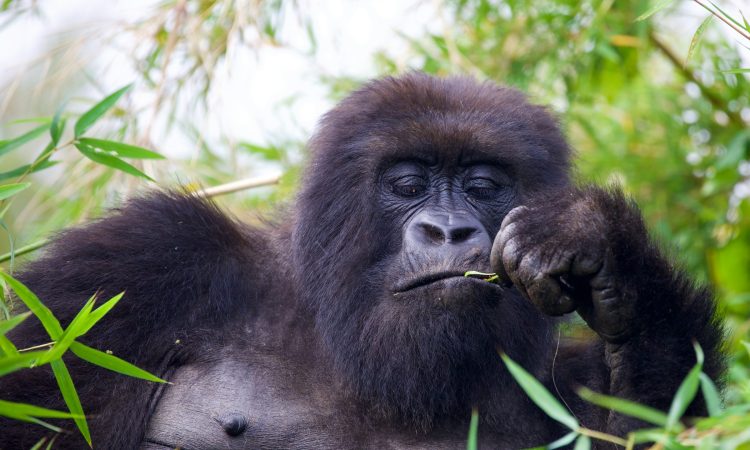
- They have short trunks, wide shoulders, and large chests. Their eyes and ears look small because of the large muscles on their heads.
- Each mountain gorilla has a unique nose print, which can be used to tell them apart, just like human fingerprints.
- Gorillas live in groups of 5 to 30 members. Each group is led by a dominant silverback who makes decisions and sets the rules.
- Mountain gorillas live in high-altitude areas, which can be cold. They have thick hair and fur that keeps them warm.
- Gorillas can use plant stems to collect ants or other food and can store food in their mouths.
- When charging, gorillas scream, stamp the ground, tear up plants, and stand on their back legs. The silverback signals others to take cover when danger is near.
- Female mountain gorillas start giving birth at 10 years old. In their lifetime, they give birth to 2 to 5 babies. Pregnancy lasts about 8 to 9 months.
- Like humans, gorillas have milk teeth that are later replaced with permanent ones. They also have 32 teeth.
- Gorillas can catch human diseases like cold, flu, pneumonia, and Ebola. These illnesses can be passed from people or come from weather changes.
- Mountain gorillas share more than 98% of their DNA with humans. Their feet are also similar to ours.
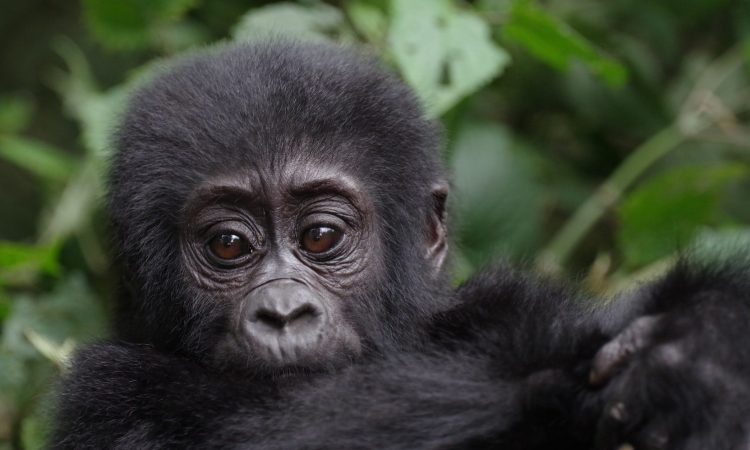
- Baby gorillas weigh around 4 pounds at birth. They breastfeed for 1 year and ride on their mother’s back between ages 2 and 4.
- Silverback gorillas protect their group, even if it means risking their own lives. Mothers also protect their babies.
- Mountain gorillas eat bamboo, shoots, stems, fruits, flowers, leaves, bulbs, bark, ants, termites, and more.
- Gorillas rarely drink water because most of the food they eat contains water. They are afraid of water and use logs to cross streams.
- They make new nests every evening using leaves and plants. Mothers share nests with babies, but males sleep alone.
- Female gorillas groom their babies, and the babies also learn to groom themselves.
- Male gorillas are called silverbacks because their backs grow silver hair as they age.