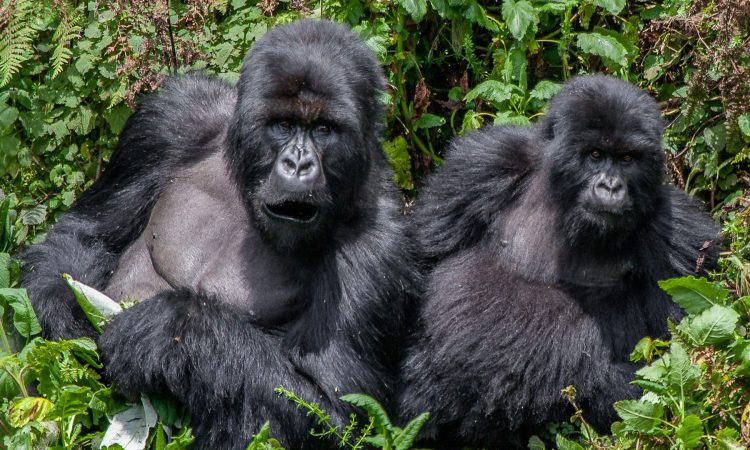
The Rushegura gorilla family can be trekked from the Buhoma sector of Bwindi Impenetrable National Park. The Rushegura family is led by Kabukojo, the silverback, who broke away from the Habinyanja gorilla family to start his own group. Book a Uganda trek to see how a Rushegura visit fits into your safari.
At one point, another silverback attempted to leave the group to form his own family but later returned with 10 females he had taken, rejoining the group. The Rushegura family is a splinter group from the Habinyanja gorilla family.
Other Gorilla Families in Buhoma
Mubare Gorilla Family: The Mubare gorilla family is the oldest habituated gorilla family in Bwindi Impenetrable Forest National Park. It was opened for tourism in 1993 and is named after the Mubare hills in Bwindi, where the family was first spotted by trackers. At the time of habituation, the family had 18 members, but the number reduced to 5, as separation is common among gorilla families. Ruhondeza, who led the group during habituation, passed away in 2012, and silverback Kanyonyi took over. Under Kanyonyi’s leadership, the family has grown to 8 members.
Habinyanja Gorilla Family: The Habinyanja gorilla family was one of the first to be habituated in Bwindi. Habituation started in 1997, and the family was opened for tourism in 1999. The family’s name comes from the local word “Nyanja,” meaning water, since the group was first seen near a swamp in Bwindi.
Gorilla Permits and Booking
Uganda mountain gorilla permits cost $800 per person per trek, while gorilla habituation permits cost $1,500 per person. To trek the Rushegura family, it’s recommended to book a permit 3 to 6 months in advance, since Buhoma is one of the most popular sectors of Bwindi National Park and permits are in high demand.
The Best Time to Visit
Bwindi Impenetrable Forest National Park can be visited all year round, but the best months are June to September and December to February. During these dry months, it’s easier to reach the park, and trekking trails are less slippery and muddy.
How the Rushegura Family Formed
Mwirima and Rwansigazi, two silverbacks from the Habinyanja family, could not get along, since one preferred to explore while the other wanted to stay in one area. This led to a peaceful separation, with Mwirima taking 12 members to form his own group.
The Rushegura gorilla family was habituated in 2000 and opened for tourism in 2002. The group now consists of 16 individuals, including 1 silverback, 4 blackbacks, 4 adult females, 4 infants, and 3 juveniles. The family is named after the Rushegura area in Bwindi, where it separated from the Habinyanja family.