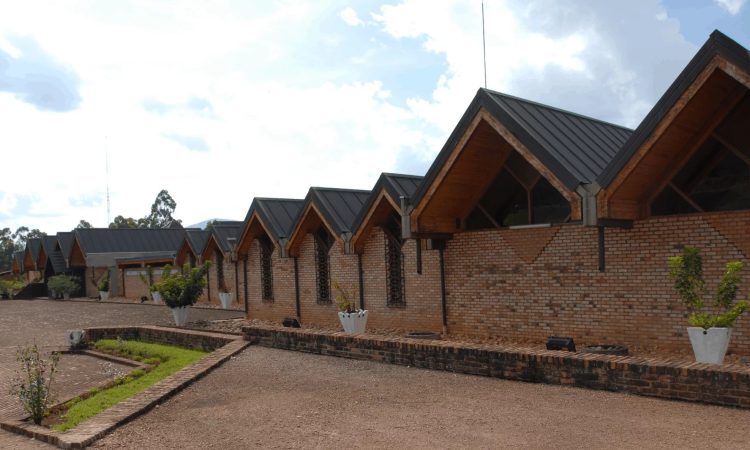
The National Museum of Rwanda, also known as Inzu Ndangamurabe, is an exciting museum in Butare (Huye). It was established in 1989 and is remembered as the site where Queen Dowager Rosalie Gicanda was tragically killed.
The museum was built with support from the Belgian government as a gift to mark 25 years of Rwanda’s independence. It stands as a treasure of cultural history, showcasing the country’s rich heritage, artifacts, and the events of the Rwandan genocide.
Unique Items Stored in the Museum
The ethnographic museum offers many fascinating sights for visitors on a Rwandan safari. It teaches about the lifestyle of Rwandans during the pre-colonial period and shows how the country has transitioned into the modern state it is today.
The museum’s roof design reflects the rhythms of traditional Rwandan drums, used in cultural songs and performances.
Inside, the museum is decorated with historic cultural items, including ancient shields, well crafted baskets, and tools created by indigenous people before colonial times.
The museum also displays tools and instruments used by early humans during the Stone Age. These items stand out for how old they are and the historical stories they carry.
The museum has seven chambers that give visitors a rich and memorable experience.
In the first exhibition hall, tourists are welcomed by souvenirs they can buy to keep as reminders of their trip, adding to the memory of the safari.
The second hall contains geological relics, showing Rwanda’s landscape and historical maps.
The third and fourth halls feature collections of ancient artifacts like pottery, hunting tools, wooden crafts, and agricultural tools.
The remaining three halls show traditional clothing, such as the raincoat called isinde, made from straw, goat skin, and bark cloth. They also display handcrafted items like mats and baskets, Rwandan architecture, and traditional games and sports played by the locals.
The final hall is a highlight, showcasing Rwandan poetry, traditional recitals, drums, harvest festivals, marriage ceremonies, and other celebrations.
The most notable display is a replica of the royal home, including details of a king’s household and family life. Visitors can walk through the site to see and imagine how the kings of Rwanda once lived.
Tourist Attractions
Kagondo Hut: This pre-colonial hut is fascinating to see, as it has stood for centuries. Its construction is a topic of interest, and tourists can step inside to experience how people of the past lived their daily lives.
Traditional Games and Sports: The sixth hall showcases old games and sports like wrestling, archery, and high jump, which people played for fitness and entertainment.
Traditional Handcrafts: The fifth hall features cultural items like baskets, mats, and hats, along with weaving, woodwork, and pottery, preserving the country’s heritage.
Artifacts Used in Daily Life: Tools and instruments used for hunting, gathering, farming, and cattle keeping are displayed in the third hall, showing how ancient Rwandans lived.
Visiting the Museum
Rwanda, known as the “country of a thousand hills,” is known for its clean and safe cities and wide natural beauty. Hidden treasures in its hills and mountains are waiting for tourists to discover during their safaris, and the National Museum of Rwanda offers one of the richest starting points for understanding the culture behind it all. Book your Rwanda safari with us to include a visit to this museum in your itinerary.