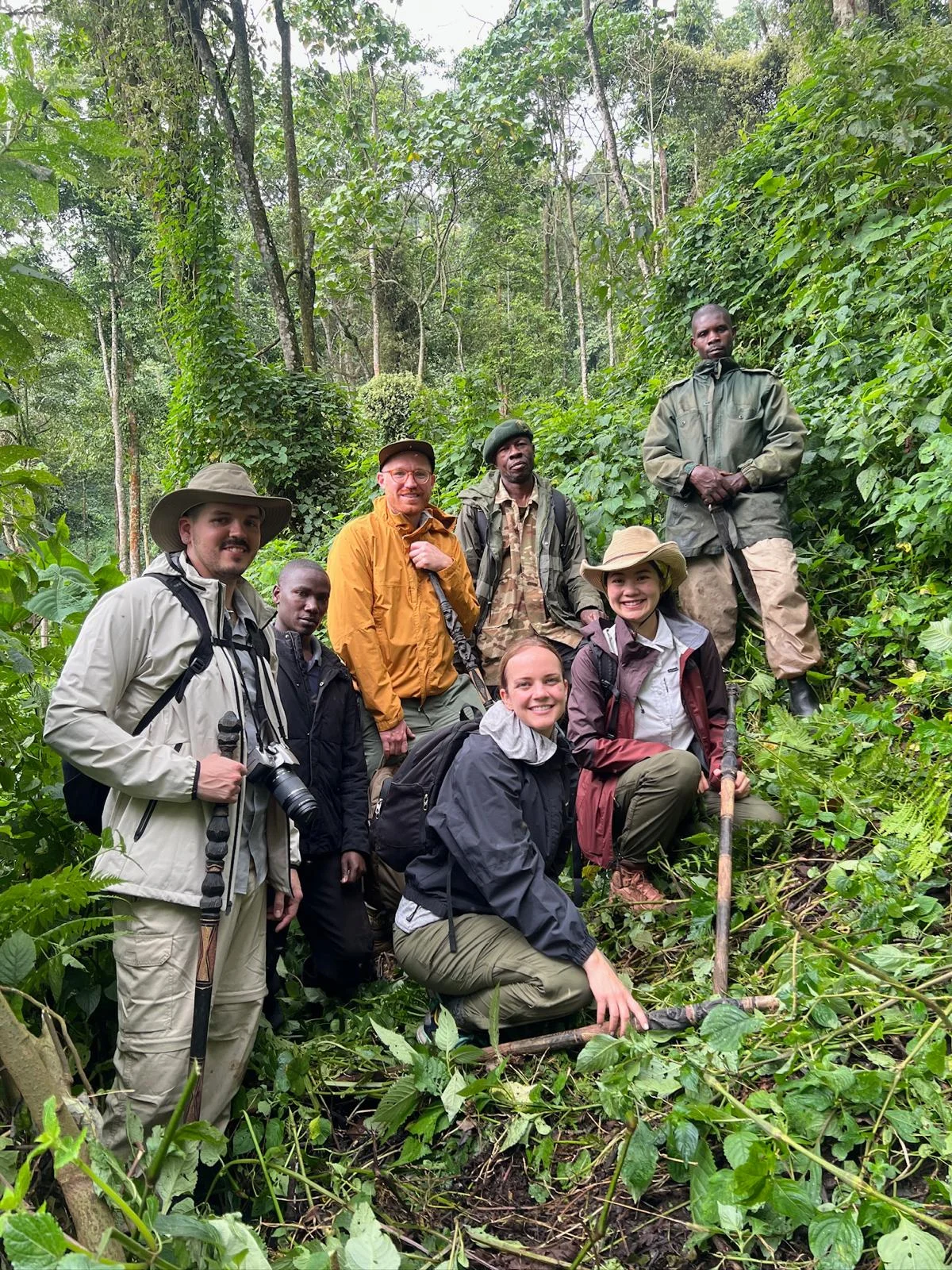

The Kyaguriro Gorilla Family was one of the first gorilla groups to be habituated in Bwindi National Park. It is located in the Ruhija sector of Bwindi, making it easily accessible for gorilla trekking from Kigali. Book a Uganda trek to see how a Kyaguriro visit fits into your safari.
The family was habituated in 1995, not for tourism but for research purposes, to study and learn more about mountain gorillas.
Early Leadership and Challenges
At the time of habituation, the Kyaguriro Gorilla Family was led by the silverback Zeus, who was later replaced by Rukina after being banished. Rukina also faced a challenge from another silverback named Mukiza, who took some members of the group to form his own family.
The Split Into Kyaguriro A and B
The Kyaguriro Gorilla Family eventually split into two groups, Kyaguriro A and Kyaguriro B, when Mukiza, who had taken over from Rukina, was ambushed by another silverback from the Bitukura Gorilla Family. These two families often stay in the same area or near each other. Park authorities initially thought they might reunite, but they did not.
On April 7, 2015, the dominant silverback Rukina was struck by lightning and died. Kyaguriro A is now led by Rukara, while Kyaguriro B is led by Mukiza.
Understanding Changing Gorilla Family Dynamics
It is important to note that gorilla family dynamics often change due to births, deaths, fights leading to splits, or the addition of new members. The number of members in a gorilla family and its leadership can change at any time, so information on any given family is always a snapshot rather than a fixed picture.
Gorilla Permits
Uganda gorilla permits cost $800 per person, and gorilla habituation permits cost $1,500 per person.
During peak season, gorilla permits are in high demand and become scarce. It is advisable to book permits 3 to 6 months in advance to avoid disappointment.
Trekking Kyaguriro A and B Today
Visitors interested in the Kyaguriro families get a rare look into how research-based habituation differs from tourism-focused habituation, since this group’s origins as a study population mean it has one of the longest-documented histories of any gorilla family in Bwindi. Because Kyaguriro A and B often remain close to one another in the Ruhija sector, trekkers may occasionally catch signs of both groups in the same general area, even though each is tracked and visited separately.