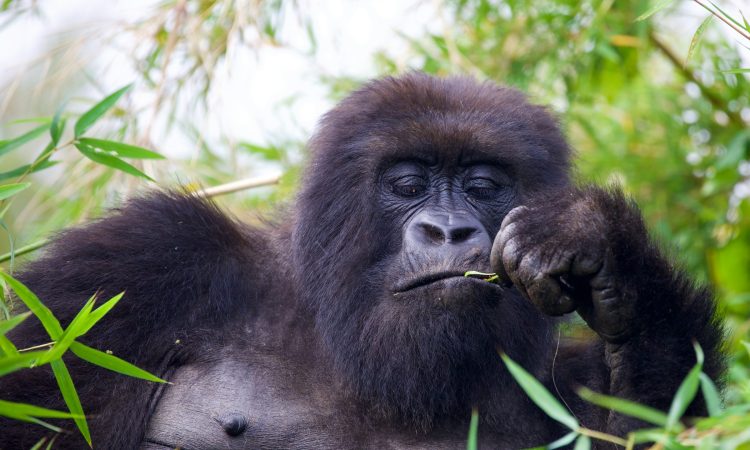
Gorilla vocalizations are not as complex as people perceive them to be. Mountain gorillas can show their feelings, wants, and emotions. They can communicate using both sounds and body actions.
Even though they cannot speak like humans, they clearly show their emotions through different sounds such as hoots, chuckles, grunts, laughter, tongue movements, cries, and purrs.
These sounds and actions help them express feelings like annoyance, fear, joy, anger, pleasure, and impatience.
Scientists have identified sixteen different types of gorilla vocalizations. These can be grouped into twelve basic types.
Gorillas often use a mix of sounds and movements to make their message clearer. For example, when a silverback is angry, it may make loud hooting sounds, beat its chest, and throw plants around.
This is a warning to other gorillas or threats. If the other side does not back away, it can lead to a serious fight.
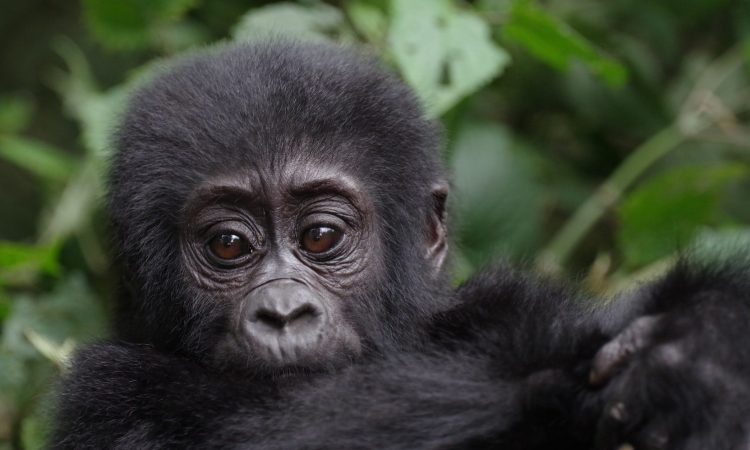
Baby gorillas also have ways of talking to each other. Their mothers can understand what they mean and respond. Young gorillas make whining and sharp sounds to get attention or help.
Gorillas use sounds for many reasons. These include asking for help, finding food, grooming, mating, building social bonds in the group, or showing they are upset. Mothers also help teach their babies how to use these sounds.
In some special cases, mountain gorillas have learned to use sign language to communicate with humans. A good example is Koko, a gorilla trained by researchers to use sign language.
Baby gorillas can recognize their mother’s voice from an early age. They can also make very quiet sounds that are hard for people to hear, especially when warning others of danger.
Mountain gorillas also have a strong sense of smell, which helps them detect nearby predators.
You can meet these amazing animals by joining one of our tours.
Book Your Tour Now
If you want to add more days or visit more places, please contact us through our main contact page using the button below.