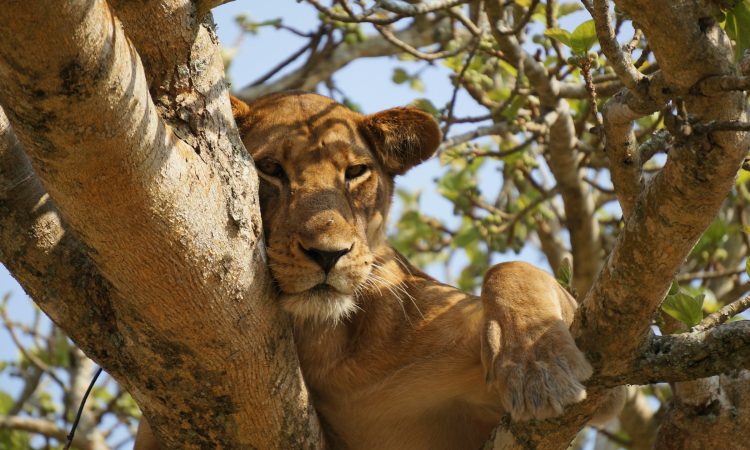
Queen Elizabeth National Park in Uganda is home to the unique tree-climbing lions. It is located in the western part of Uganda and is the country’s most visited tourist destination.
The park has some of the highest biodiversity in Africa, featuring wildlife, Savannah grasslands, lakes, swamps, and much more. Explore our Uganda wildlife safaris to see how a visit here can fit into a broader itinerary.
Tree-Climbing Lions in Uganda
The tree-climbing lions can only be found in the Ishasha sector of Queen Elizabeth National Park and Lake Manyara National Park in Tanzania. Lions are also found in Kidepo Valley and Murchison Falls National Parks, but they are not like the tree-climbing lions in Queen Elizabeth. The common trees they climb are sycamore fig trees and acacia trees.
The reasons why these lions climb trees are not fully understood, but researchers have suggested a few explanations.
Lions in Queen Elizabeth may climb trees to get a better view of their prey, such as antelopes and zebras, since the higher vantage point provides a clearer view than being on the ground.
During the rainy season, the ground is filled with breeding tsetse flies that bite animals, and climbing trees may help the lions avoid being bitten.
In the hot season, the ground becomes very hot, and lions may climb tree branches to cool off from the heat.
Other Activities in the Ishasha Sector of the Park
Wildlife Viewing: Queen Elizabeth National Park is not only home to tree-climbing lions but also other wildlife such as elephants, warthogs, bushbucks, impalas, Ugandan kob, leopards, and reedbucks. Tourists can go for game drives to enjoy views of wildlife and the landscape.
Boat Cruise at Kazinga Channel: Boat safaris can be done at the famous Kazinga Channel, the world’s longest natural canal. The channel connects Lake Edward and Lake George and provides water for various wildlife in the park. During the boat cruise, tourists can see wildlife gathering at the shores and spot crocodiles and hippos near the boat.
Bird Watching: Queen Elizabeth National Park is a top birding destination in Uganda, with over 600 species of birds recorded. Some examples of birds found in the park include the black-bellied bustard, African crake, rufous-naped lark, palm-nut vulture, long-crested eagle, African finfoot, red-chested cuckoo, brown-eared woodpecker, honeyguide greenbul, black bishop, African moustached warbler, brown snake eagle, pallid harrier, saddle-billed stork, papyrus gonolek, pied kingfisher, and Carruthers’s cisticola.
Where to Stay in the Ishasha Sector of Queen Elizabeth
When planning to visit the tree-climbing lions in Queen Elizabeth National Park, tourists should book accommodation in the Ishasha sector. Some of the lodges include Ishasha Wilderness Camp, Ishasha Jungle Lodge, Enjojo Lodge, Tree-Climbing Lions View Lodge, and others.
Best Time to Visit Ishasha
Ishasha can be visited year round, but the dry seasons, from June to September and December to February, offer the best conditions for spotting the tree-climbing lions, since the animals are easier to see through thinner vegetation and the roads within the sector are more manageable. See our full best time to visit Uganda guide for more detail.
Combining a visit to Ishasha with a broader Queen Elizabeth National Park itinerary, including a boat cruise on the Kazinga Channel, gives travelers a well-rounded look at one of Uganda’s most rewarding wildlife destinations.