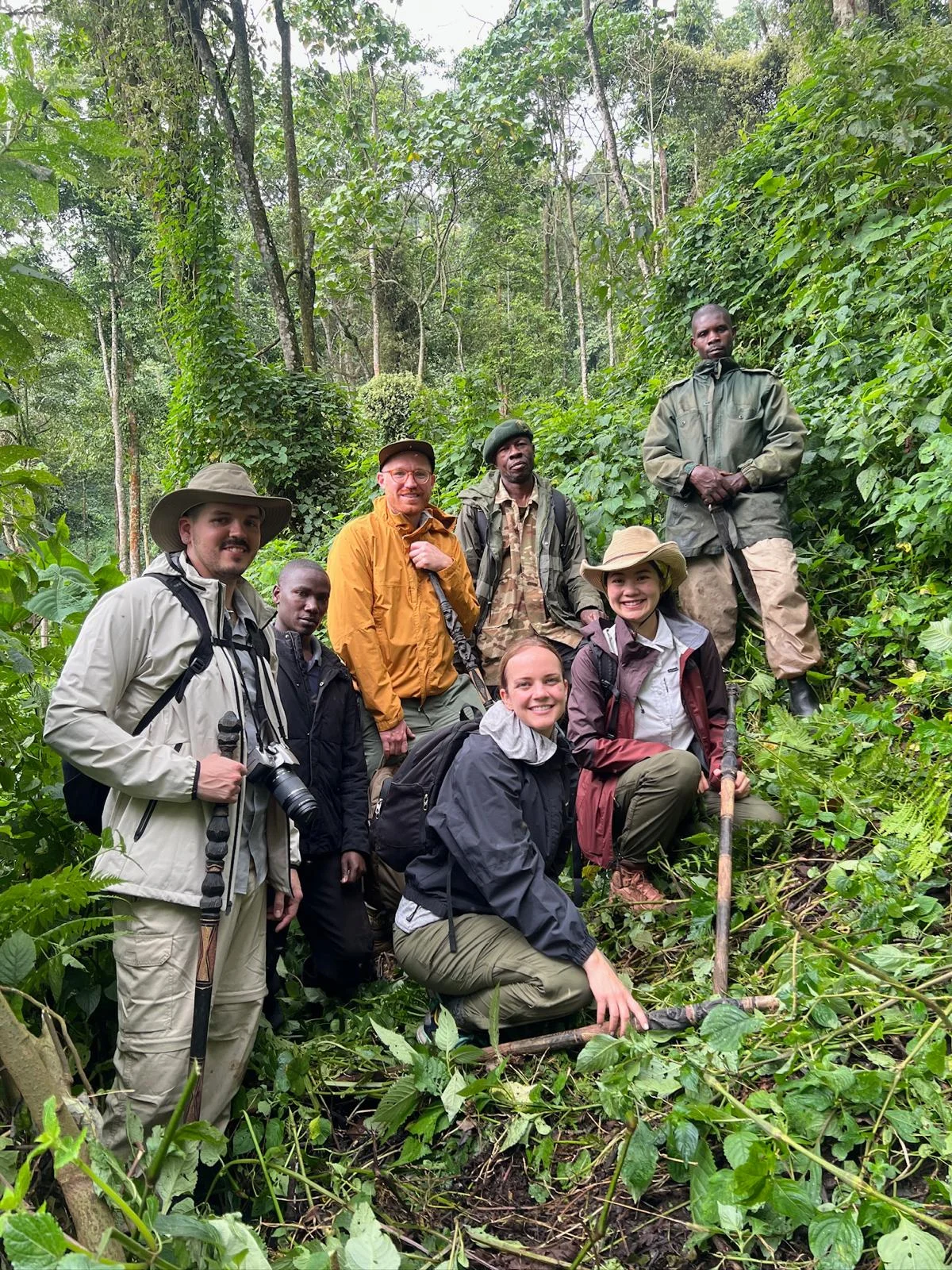

Planning for gorilla photography in Rwanda? Photographing mountain gorillas is a dream for many travelers. While in the presence of these apes, capturing the one-hour experience in photos is a great way to remember the moment and share it with friends and family back home.
Rwanda is one of the best places for gorilla photography compared to Uganda and Congo. This is because the gorilla habitat in Rwanda mainly consists of bamboo and short grass, unlike the thicker forests in the other parks, where gorillas are often partially hidden by vegetation.
Why the Terrain Makes a Difference
The terrain in Volcanoes National Park is also easier to hike and not too steep, which makes it easier to get clear photos, even when the gorillas are on the move.
However, the rule of no flash photography still applies in all gorilla parks. Flash can irritate gorillas and may cause them to feel threatened or even charge at the person or group using it.
Photography Tips and Rules
Make sure your camera is fully charged before the trek, or bring extra batteries to avoid disappointment. You must also keep a distance of at least 7 meters from the gorillas, since these are wild animals despite their calm demeanor.
In Rwanda, you are given only one hour to observe and photograph the gorillas, so it’s worth using that time wisely, thinking ahead about the shots you most want to capture.
Gorilla Filming Permits
If you’re interested in filming gorillas in Rwanda rather than simply photographing them, the filming permit costs $5,000 per person. These permits can be obtained through the Rwanda Development Board or a trusted tour company.
Gorilla Permit Costs and Requirements
Rwanda has the most expensive gorilla permits among the three countries, with each permit costing $1,500 per person. Children under 15 and adults with illnesses such as flu are not allowed to trek gorillas.
Gorilla permits should always be booked at least three months in advance, especially during peak season, given how limited and in demand they are.
Making the Most of Your Photography Trip
For photographers who want the best chance at clear, well-lit shots, pairing Rwanda’s open terrain with a visit during the dry season, from June to September or December to February, gives the strongest combination of favorable light and easier visibility. See our full best time to visit Rwanda guide for more detail. Many photographers also find it worth bringing a range of lenses, since gorillas can be close enough for wide shots one moment and further off in the bamboo the next.