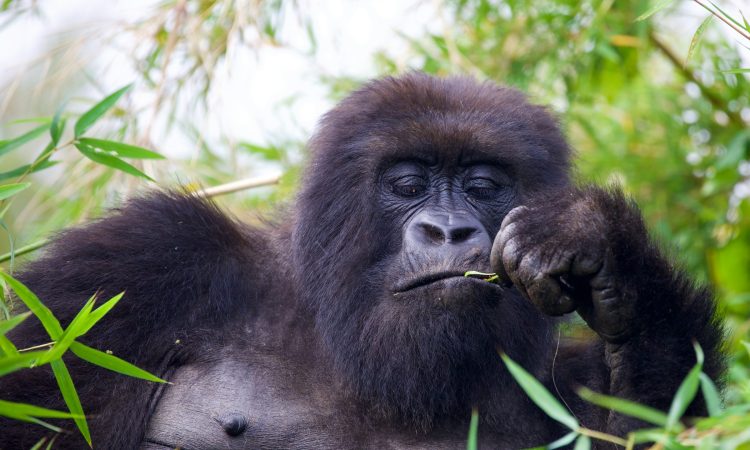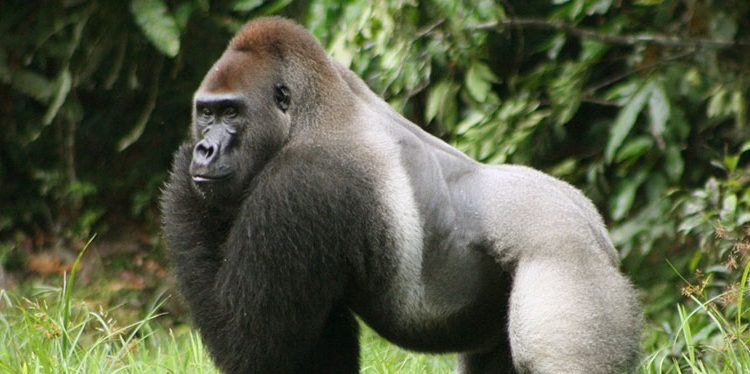
The eastern lowland gorilla, also known as Gorilla beringei graueri, is a subspecies of the eastern gorilla. This subspecies is the largest of all four gorilla types and is only found in Kahuzi-Biega National Park, Maiko National Park, Itombwe Massif, Tayna Gorilla Reserve, and Usala Forest in the Democratic Republic of Congo.
A group of eastern lowland gorillas can have up to 30 members, led by one dominant silverback. The silverback has access to all the females in the group. When young males grow up, they either challenge the silverback for leadership or leave the group with some members to form a new family.
The name Gorilla beringei graueri was given in honor of an Austrian scientist, Rudolf Grauer, who first identified this subspecies in the early 20th century.
A male eastern lowland gorilla weighs about 210 kilograms, while females weigh around 100 kilograms. Males can grow as tall as 1.85 meters, while females are shorter, reaching up to 1.6 meters. These gorillas also live at higher altitudes than other gorilla types.
According to a 2004 report, there were only about 5,000 eastern lowland gorillas left in the wild. They have shorter hair on their back and body compared to other gorillas. Like other male gorillas, they develop grey hair on their backs, which shows they are silverbacks.
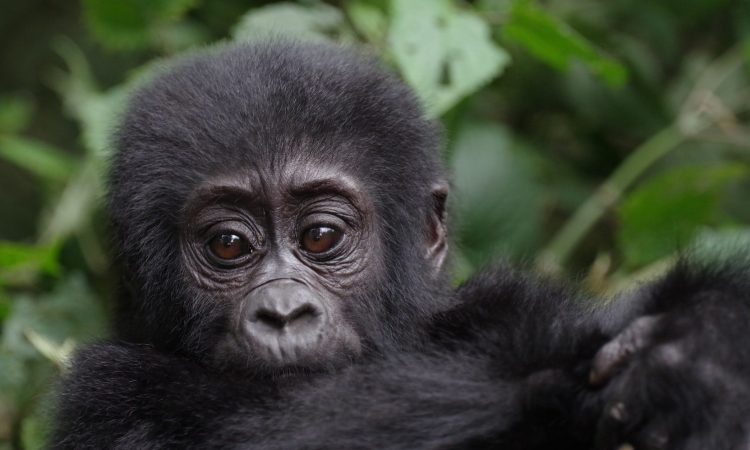
Eastern lowland gorillas are herbivores. They eat fruits, leaves, shoots, stems, and bark. Sometimes, they also eat ants, termites, and insects. Female gorillas have a pregnancy period of about 8 to 9 months. After birth, the babies breastfeed for around three years and cling to their mothers until they are more mature.
You can tell the eastern lowland gorilla apart from other gorillas by its short nose, strong body, large hands, and thumbs that can grip. These gorillas can also live in zoos, unlike mountain gorillas, which cannot survive in captivity.
Trekking Eastern Lowland Gorillas
Eastern lowland gorillas can be trekked in Maiko and Kahuzi-Biega National Park in the Democratic Republic of Congo. The cost of a Congo gorilla trekking permit is $400.
Tourists who plan to go gorilla trekking are advised to travel in the dry season to avoid problems caused by rain, such as muddy trails that make trekking difficult.
Book Your Tour Now
If you want to add more days or visit more places, please contact us through our main contact page using the button below.